Six government delegates and eight subdelegates have left their posts to stand for the PSOE in Spain’s 29 November general election. Electoral law bars them from remaining in office as candidates, forcing a territorial reshuffle.
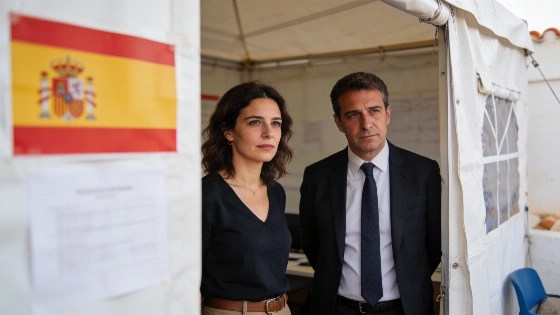
The political reshuffle reached the emergency command post in Oliva on Tuesday. Pedro Sánchez met Pilar Bernabé there as she dealt with the dana Adam response, on the same day she left her post as the Government’s delegate in Comunidad Valenciana.
She is one of 14 senior territorial officials who have stepped down to stand in the PSOE’s lists for the 29 November general election. Six delegates and eight subdelegates are affected.
The departures are required by the Ley Orgánica del Régimen Electoral General (LOREG). Ministers can keep their portfolios while standing as candidates; government delegates and subdelegates must leave their posts.
The Government has moved to replace delegates in Comunidad Valenciana and Asturias; Andalucía and Cataluña; Aragón and Extremadura. The subdelegates affected served in Barcelona and Málaga; Sevilla and Granada; Almería and Córdoba; Pontevedra and Lérida.
The departures came as the PSOE completed its candidate lists for the election. The party’s Federal Lists Commission unanimously approved proposals from territorial federations on 16 October, and the Federal Committee ratified the lists for Congress and the Senate the following day. On 17 October, the committee also unanimously proclaimed Sánchez, the PSOE secretary-general and Spain’s prime minister, as the party’s candidate. He is set to lead the Madrid list, with Defence Minister Margarita Robles in second place.
The approved lists include 887 candidates for Congress and the Senate: 444 women and 443 men. Women head 52% of the PSOE’s Congress lists, while the party said the share of women leading Senate lists had risen by 10 percentage points compared with the 2023 election.
The account links the departures to poor election forecasts for the PSOE and says Sánchez sought places on candidate lists for his allies. After the lists were approved, party leaders publicly emphasized unity and expressed confidence in overcoming unfavourable polling predictions. The party’s federal committee had backed him as its candidate for the same vote, a decision covered in an earlier report.