Artisans and artists in Seville’s corralones are under pressure as developers seek to replace workshops with tourist accommodation. Residents report harassment and demand urgent protection from authorities.
Longstanding artisan workshops in Seville’s historic corralones are under threat as property developers intensify efforts to convert these unique spaces into hotels and tourist apartments. In recent months, tenants in the corralones of Calle Castellar have reported escalating harassment, including physical aggression and intimidation by a desokupas company, as the building’s owners seek to clear the premises for a new hotel and 35 apartments. This conflict has reignited debate over the future of these creative hubs, which have shaped the city’s cultural and economic identity for decades.
Artisans and creators argue that the corralones are the last bastion of authentic, local productivity in Seville’s historic centre. They warn that unchecked gentrification and speculative tourism threaten not only their livelihoods but also the character of entire neighbourhoods. Many point to the collaborative spirit and cross-disciplinary exchange that define these spaces, where musicians, designers, blacksmiths, and sculptors work side by side. Gervasio Iglesias, founder of Zanfoña Producciones, recalls how the corralones fostered creative projects like the casting for the film 7 Vírgenes, and insists that such environments deserve full protection from demolition or commercial conversion.
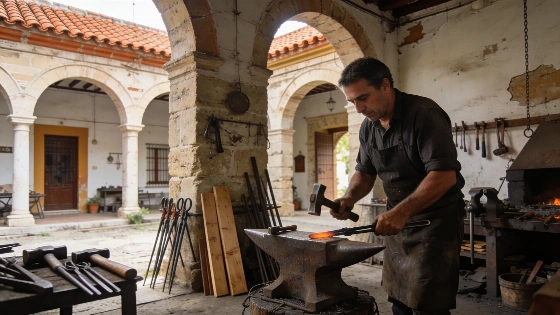
Despite the departure of some key figures, the corralones of Plaza del Pelícano and Pasaje Mallol continue to host a vibrant mix of trades. German blacksmith Alex Richter, the last forja craftsman in Seville, has worked there for over 25 years, collaborating with younger artisans like Iván Torrado and Alberto Pozo, who build religious floats for local brotherhoods. The interconnected workshops—ranging from carpentry and sculpture to bicycle repair and flamenco dance—create a unique ecosystem that artisans say cannot be replicated in isolated studios or commercial premises on the city’s outskirts.
However, the pressure on these spaces has grown. After the corralones of Castellar were acquired by Garaje Santa Inés in 2006, tenants saw rents more than double and maintenance decline, prompting many to leave. The situation escalated in 2023 when a €12 million sale to developer Arenas de la Bellida required the property to be vacated by June. Reports of violent evictions and ongoing intimidation have left remaining tenants feeling vulnerable. Richter describes a climate of constant threat, warning that prioritising tourism over local industry risks undermining the city’s foundations.
Some corralones have already been converted into apartments, while others, like those in Pasaje Mallol, have become cultural landmarks, hosting the early rehearsals of bands such as Califato 3/4 and Pony Bravo. Yet uncertainty hangs over their future. Artisans like Laura Ochoa note that rising rents have forced many out of the neighbourhood, and fear that if one corralón falls, others will follow. The lack of secure, long-term leases leaves many reluctant to speak publicly, highlighting the precariousness of their situation.
Efforts to protect these spaces have a history. Two decades ago, local residents and the Plataforma de Artesanos y Artesanas del Casco Antiguo (PACA) successfully opposed changes to urban planning that would have erased artisan activity from the area. Although the Junta de Andalucía once pledged to expropriate and safeguard the corralones, the economic crisis stalled these plans. Today, only a few protected spaces remain, such as Rompemoldes in San Julián, where the municipal housing company Emvisesa rents workshops and living spaces to artisans. Pablo Fernández, a luthier based there since 2012, acknowledges the relative security this arrangement provides, but notes that it depends on shifting political priorities.
Calls for greater municipal and regional support continue. Artisans argue that the city’s focus on high-profile events like Feria and Semana Santa overlooks the value of local creative industries. They stress that the collaborative networks formed in the corralones also strengthen neighbourhood solidarity, a quality at risk as digital nomads and short-term residents replace long-term locals. Richter and Ochoa warn that losing the corralones would mean losing the businesses and social fabric that make the area distinctive.
Similar tensions between local communities and urban development have surfaced in other Spanish cities. For example, in Madrid, a fire at La Vaguada shopping centre led to a major evacuation after a man expelled for theft triggered the incident, highlighting the impact of rapid commercial changes on established neighbourhoods. Details of that event can be found in this report on the La Vaguada evacuation.
Seville’s corralones represent a living heritage of industrial and artistic collaboration. Their fate now hinges on whether authorities will intervene to protect these spaces from the pressures of speculation and mass tourism. Without decisive action, the city risks losing not only its creative heart but also the authentic neighbourhood life that has defined it for generations.