A new edition of 'Tres comedias' revives Juan Cariola Larraín’s legacy. Paula Baldwin Lind highlights the translator’s impact and the evolving role of women in Shakespeare’s works. The project brings renewed attention to Chile’s contribution to world literature.
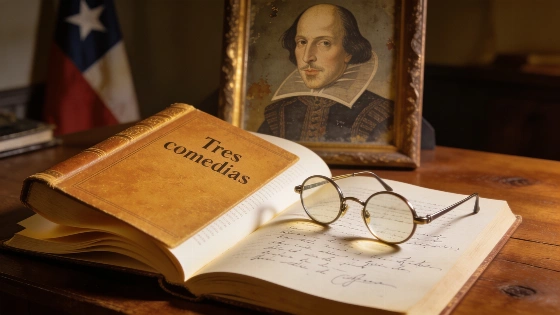
A major literary event in Chile has brought renewed attention to the country’s role in making Shakespeare accessible to Spanish-speaking audiences. Editorial Universitaria has released a new edition of 'Tres comedias', featuring 'El mercader de Venecia', 'Sueño de una noche de verano', and 'Como gustéis'. This publication not only revives classic translations but also spotlights the work of Juan Cariola Larraín, the Chilean translator who rendered more of Shakespeare’s plays into Spanish than any of his compatriots.
Paula Baldwin Lind, a leading academic and Shakespeare specialist, contributed the introduction to this edition. Her research, conducted alongside Braulio Fernández Biggs, reconstructs the biography of Juan Cariola Larraín and examines the significance of his translations. Their collaboration began in 2010, when a survey of Chilean translations revealed Cariola Larraín’s pivotal role. The discovery led to further investigation, including contact with his family and a deeper understanding of his teaching and translation work.
The new edition, supported by the Fondo Nacional del Libro y la Lectura, is more than a literary reissue. It is a cultural and educational milestone, restoring to circulation translations first published in 1982 and reaffirming their value for both scholars and students. The editorial team’s methodology—built on shared expertise and complementary perspectives—ensured a nuanced presentation that contextualizes both the translator’s legacy and the place of comedy in Shakespeare’s oeuvre.
Baldwin Lind’s analysis highlights how Shakespeare’s comedies, while not always subversive by modern standards, often place women at the center of the action. Characters like Hermia in 'Sueño de una noche de verano' challenge social norms by asserting their right to choose, defying family and tradition. Porcia, Hermia, and Rosalinda emerge as intelligent, resourceful, and courageous protagonists, each confronting obstacles and risking much to defend their convictions. Through these figures, Shakespeare not only questions the roles assigned to women but also explores broader themes of human resilience and agency.
The project also underscores the importance of academic rigor and cultural context in literary studies. Baldwin Lind’s experience as a Shakespeare expert in Chile demonstrates the value of systematic research and a deep understanding of historical and theatrical backgrounds. She encourages young women considering careers in the humanities to pursue their interests with determination and confidence.
Chile’s engagement with Shakespeare is part of a wider trend of literary translation shaping national identities. The reissue of 'Tres comedias' serves as a reminder of the enduring relevance of classic works and the translators who bridge linguistic and cultural divides. In a related context, discussions about the impact of migration and cultural adaptation have also surfaced in other spheres, as seen when Boris Izaguirre reflected on exile and identity in his own journey from Venezuela to Spain (read more about Izaguirre’s experience here).
For readers and educators in Spain and Latin America, the new edition of 'Tres comedias' offers both a literary resource and a case study in the power of translation. Juan Cariola Larraín’s work, now brought back into focus, illustrates how dedicated individuals can shape the way global classics are understood and appreciated across generations and borders.
Shakespeare’s influence in the Spanish-speaking world has grown steadily over the past century, with numerous translations and adaptations enriching local theater and education. The renewed interest in Cariola Larraín’s contributions may inspire further research into the history of literary translation in Chile and beyond. As the humanities continue to evolve, projects like this highlight the ongoing dialogue between cultures and the lasting impact of those who make such exchanges possible.