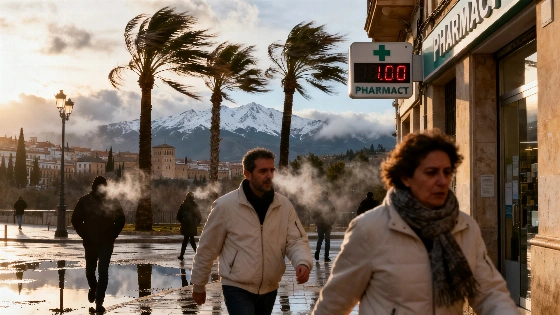
Spain faces a surge in temperatures this Saturday, with highs above 40°C in several valleys. Storms and tropical nights are forecast in many areas. Authorities warn of challenging conditions ahead of the incoming heatwave.
Spain is set to experience a sharp rise in temperatures this Saturday, with several regions expected to see highs exceeding 40°C just before a major heatwave takes hold. According to Efe, the most intense heat will hit the valleys of the Tajo, Guadiana, and Guadalquivir, while much of the centre, southwest, and the Ebro valley could see maximums near 39°C. The spike in temperatures comes ahead of a heatwave forecast to last until Wednesday, raising concerns for residents and local authorities.
Despite the dominance of clear skies and high pressure across most of the country, the weather will not be entirely stable. Thunderstorms are likely in central and northern Spain, with the north of Castilla y León at particular risk for severe storms and large hail. Some northern coastal areas, as well as Ceuta and Melilla, will start the day with low clouds that are expected to clear as the day progresses.
Nighttime conditions will also be challenging, with so-called 'tropical nights'—minimum temperatures of at least 20°C—forecast for many parts of the centre-south, southwest, the Ebro valley, the Balearic Islands, and Mediterranean coastal areas. This could impact sleep quality and increase health risks, especially for vulnerable groups.
Regional forecasts highlight significant local variations. Galicia will see morning and evening low clouds along the northern coast, with fog in higher inland areas and a marked rise in temperatures, especially in the Rías. Asturias and Cantabria are set for similar patterns, with afternoon storms and the possibility of hail and strong wind gusts, particularly inland. The Basque Country will experience a slight drop in maximum temperatures in some interior areas, but storms and strong winds are also expected later in the day.
In Castilla y León, scattered showers and storms—some potentially severe—are likely, while Navarra and La Rioja could see strong gusts and hail during afternoon and evening storms. Aragón and Catalonia will face dust in suspension and the risk of storms, especially in mountainous areas, with the Ebro valley and Lleida region forecast to reach particularly high temperatures.
Extremadura, Madrid, and Castilla-La Mancha will remain mostly clear but are not exempt from isolated storms, especially in the afternoon and evening. Madrid could see highs of 37°C in low-lying areas, while Toledo and Ciudad Real may experience locally intense storms with hail. The Valencian Community and Murcia will see rising temperatures and some dust in the air, with moderate winds along the coast.
Andalusia is forecast to see a general rise in both minimum and maximum temperatures, with the possibility of storms in the mountains and dust in suspension. The Balearic Islands will experience clear skies, rising temperatures, and strong easterly gusts in the Tramuntana mountains. The Canary Islands will have variable cloud cover in the north of the larger islands, with a slight increase in temperatures and moderate northeast winds.
Winds across the country will generally be light, with coastal breezes prevailing. The southeast and the Strait will see moderate winds, while the Balearic Islands and eastern regions will experience light to moderate easterlies. In central Spain, winds will be variable but mostly from the south and light.
Spain has seen a trend of increasingly frequent and intense heatwaves in recent years, with 2022 and 2023 both recording record-breaking summer temperatures. The Spanish Meteorological Agency (AEMET) regularly issues heat alerts and recommends precautions such as staying hydrated, avoiding outdoor activity during peak heat, and checking on vulnerable individuals. The upcoming days are expected to test the resilience of infrastructure and public health systems, especially in regions unaccustomed to prolonged extreme heat.