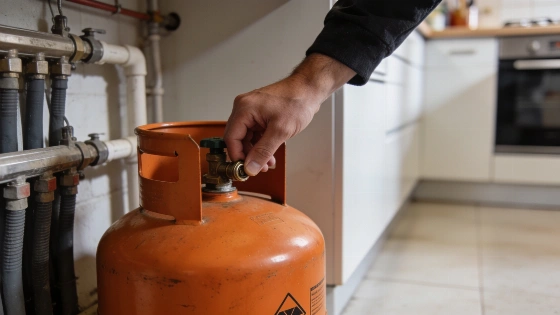
The government has limited the rise in Spain's regulated gas tariff and fixed the price of a butane cylinder at 19.55 euros through 30 June 2027.
At the 1 October review, Spain's existing gas formula would have pushed the regulated tariff up by more than 45%. The Council of Ministers has now put a limit on that increase. It has also fixed the maximum price of a butane cylinder at 19.55 euros through 30 June 2027.
The pressure comes from the gas market. Prices in the European Union rose above 80 euros per megawatt-hour during the second week of September. Reuters and AFP tied the intervention to higher European gas prices, the war in Iran and the approach of the heating season.
Spain’s minister for the ecological transition, Sara Aagesen, warned that without government intervention the regulated gas bill could have risen by more than 45% at the October review.
That jump is now capped.
Under the new measure, the gas quotation component in the formula may rise by no more than 35% from its current value. The resulting increase in the TUR will stay around 15%.
The limit will remain in place during the next quarterly reviews. The permitted rise in the gas quotation will then be capped at 15% until the deficit created by the measure has been recovered and the balance restored.
Colder weather is approaching. Heating demand is expected to rise.
The measure covers households and small businesses on the regulated tariff. It keeps the existing tariff mechanism in place instead of replacing it.
The measure does not cover every gas customer in Spain. El Independiente estimates that about 3.1 million households are affected by the TUR adjustment, while roughly 60% of households buy gas on the free market and remain subject to their suppliers’ terms; the butane ceiling reaches almost 8 million households.
Butane users get a separate cap. The bottled liquefied petroleum gas formula already limits each two-month revision to a rise or fall of 2%. The government has now fixed the maximum price at 19.55 euros. The current ceiling is 18.84 euros.
Any deficit caused by the cap will be recovered through the usual system.
The winter gas reserve is also growing. This year's Plan de Acción Invernal will hold enough liquefied natural gas in regasification plant tanks to cover 21 days across the five winter months. Last year's plan covered 16.5 days.
November rises to three days from one. December reaches 3.5 days from 2.5. March rises to three days from 1.5. January stays at 6.5 days, while February remains at five.
RTVE reported that the plan should provide extra protection against supply stress during the winter period.
The goal is practical. The reserve is meant to protect access to gas during sharp demand increases or disruptions in global supply chains.
The decree also allows the government to authorise CORES to choose the geographic locations and specific storage sites used to release strategic security reserves during periods of supply tension. The power is intended to keep supplies moving to all consumption centres.
Spain's electricity market is less exposed to the gas surge than those of other European countries because renewable generation has expanded. Gas prices still reach households and companies directly outside the electricity market.
The government has focused the package on the regulated gas tariff, bottled gas reserves and market enforcement. It is not a general freeze on energy costs.
The sanctions regime under Law 34/1998 on the hydrocarbons sector is also being tightened. Fines for different infringements will double. The changes cover minimum security stocks, information supplied to the administration and anticompetitive practices.
This is targeted protection. It slows price rises for essential energy products and adds to physical reserves.
Part of the cost is postponed through a recovery mechanism. The TUR increase is restrained, the butane ceiling is fixed and the supply system gets more cover.
The underlying exposure remains. Fossil fuel prices are still volatile.