Spain’s largest unions are preparing a 24-hour general strike to protest the country’s deepening housing crisis. Tenant groups and smaller unions are backing the move, a rare show of unity that could disrupt daily life ahead of national elections.
CC OO and UGT, Spain’s two biggest unions, are backing plans for a 24-hour general strike over a housing crisis that has forced thousands from their homes and left affordable rents beyond the reach of many workers. The action still needs approval from the top bodies of both unions. It would be their first joint action of this size since 2010.
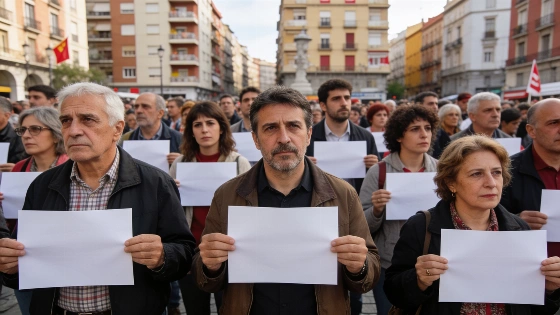
Calls for a walkout grew louder after mass protests swept through Spanish cities, where demonstrators demanded action on rising rents and stagnant pay. Both unions, each with about a million members, say the strike is about more than wages: it is about the right to a decent home. Their joint statement is blunt: “We demand decent wages to access decent housing.” The strike date will be set with the tenants' union and other social groups.
The anarchist CGT and the Sindicato de Inquilinas had already backed the idea. But when CC OO and UGT joined, the protest moved from the margins to the national stage. The Sindicato de Inquilinas had been calling for a general strike for weeks, making it the basic demand at last weekend’s rallies. CGT confirmed its support after its recent congress. The tenant group said it would proceed with CGT alone if the big unions held back. By Monday afternoon, CC OO and UGT had made their move public, quickly shifting the balance of power.
No date has been set. Union sources point to early November as the likely window, before the official campaign for the November 29 elections begins. Unions want housing on the agenda before voters head to the polls. UGT General Secretary Pepe Álvarez said the action would take place before the campaign starts and would not overlap with it, narrowing the window for the strike.
Business leaders are making their anger clear. CEOE and Cepyme, Spain’s basic employer groups, issued a sharp statement calling the strike a political move. They say housing policy is the government’s responsibility and should not disrupt business. “The issues behind this strike are not, in essence, of a labor nature,” their statement says. Employers are not calling the strike illegal, but will review the details once the formal notice is filed. CEOE President Antonio Garamendi said a strike over housing does not fit the usual definition of a labor dispute. He also called the housing problem "real and complex."
Official union statements say demands also include wage increases of 4 to 7% with revision mechanisms, amid stalled negotiations with employer associations. The unions are also pressing for a public housing pact and rent controls. They want a permanent fund of protected social housing, along with full implementation of the right to housing law across all Spanish regions.
Prime Minister Pedro Sánchez has kept his response measured, pointing out that the right to strike is protected by Spain’s constitution. “We can only respect it,” Sánchez said. He acknowledged that housing is a problem for “many workers and their families.” The Ministry of Labor, led by Yolanda Díaz, echoed this position, calling the strike a fair response to a problem that hits workers hardest. Several Spanish media outlets report that the political climate changed after the Congress of Deputies rejected government housing decrees, prompting unions to step up pressure.
Political rivals tell a different story. The Partido Popular claims the strike’s timing benefits Sánchez, arguing that unions are trying to boost his image as the election nears. Vox calls the unions government puppets and labels the protest part of Sánchez’s “dystopian Spain.” Vox’s own union, Solidaridad, has not gained ground in Spanish workplaces. It signed just two agreements in 2025, while CC OO and UGT secured hundreds.
General strikes are rare in Spain. The last one, in October last year, was called by CGT to protest the Israeli assault on Gaza and lacked the support of the major unions. The last time CC OO and UGT backed a full general strike was in November 2012. That strike opposed austerity during the Great Recession and was coordinated with unions in Italy and Portugal, with unions in Cyprus and Malta also involved. In the past forty years, Spain’s basic unions have called only eight general strikes. Union sources say the list of demands is being drawn up with the tenants' movement and neighborhood groups to unite labor and social causes.
Spain is waiting for a date. Unions are betting that a massive walkout will force politicians to face the housing crisis. Employers brace for economic fallout as the government seeks to balance rights and public order. The strike’s size and timing send a message: housing tests political will and economic priorities in Spain.