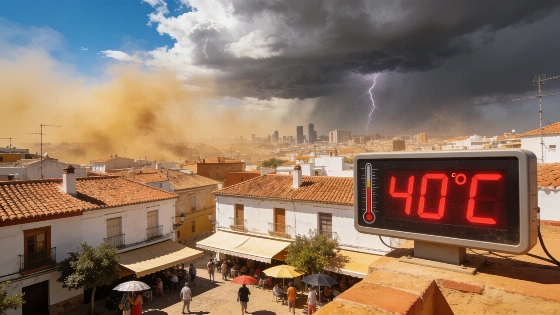
Large parts of Spain are enduring another stretch of extreme heat, with the Agencia Estatal de Meteorología (AEMET) maintaining orange alerts across the eastern and southern regions, with the Balearic Islands also covered. Maximum temperatures are expected to reach between 37°C and 41°C, and in some areas, thermometers will again surpass 40°C. AEMET’s Meteoalerta system issues geographically detailed warnings for up to 72 hours and continues to monitor hazards once they begin. The heatwave shows no sign of easing. Authorities are now warning of a new threat: severe afternoon storms, some bringing intense winds and hail.
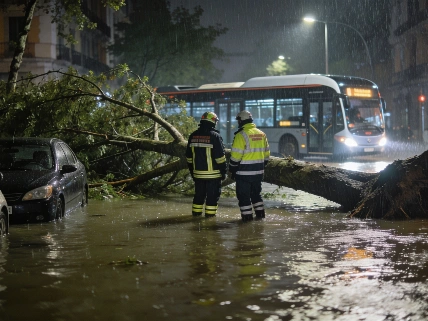
AEMET says the combination of very warm surface air and growing atmospheric instability will trigger stormy showers, especially in the eastern and southeastern interior. These storms are expected to be highly localized but could be intense where they strike, bringing the risk of hail and sudden, powerful gusts. In its July forecasts, AEMET also warned of locally strong thunderstorms in the Iberian System, the Pyrenees, and the upper Ebro. The agency identifies the interior of Castellón, Tarragona, and Valencia, along with northern Murcia, eastern Andalucía, and southeastern Albacete, as the areas most at risk of lightning. Hail and damaging winds are also possible.
Although the sun will dominate much of the country, clouds are expected to develop in several autonomous communities during the afternoon, raising the likelihood of storms. In Castilla-La Mancha, Albacete and eastern Cuenca may experience downpours mixed with dust due to suspended particles, while storm cells with hail and strong gusts could form in Murcia’s interior mountains. The Balearic Islands will continue to face high temperatures and calima, with tropical nights expected. The Canary Islands remain largely stable. AEMET’s regional warning structure reflects this uneven risk: severe conditions can affect particular inland areas even as much of the country remains sunny.
Nighttime offers little respite. Minimum temperatures are forecast to stay above 20°C across much of the south, the Mediterranean coast, and the Balearics, resulting in so-called 'tropical nights.' In some Mediterranean coastal areas and the Guadalquivir valley, lows may not drop below 25°C, creating what meteorologists call a 'torrid night.' Madrid is again among the regions expecting the highest temperatures, with much of the area likely to see 39 to 40°C, while even the Sierra could exceed 35°C. Navarra's Ribera could approach 38°C. Heat will persist in Castilla y León, the Basque Country, La Rioja, Aragón, and Extremadura, where temperatures are set to rise further compared with previous days.
Recent weather patterns have brought heat alongside increased storm risk, particularly in the southeast. A recent report on severe storms and hail in Valencia and Murcia highlighted how such events are becoming more frequent during heatwaves, underscoring the need for continued vigilance.
Spain's heatwaves have become more frequent and intense in recent years, often accompanied by unpredictable storm activity. High temperatures and sudden storms can disrupt daily life, affect agriculture, and raise the risk of wildfires. AEMET’s warnings cover hazards including heat, thunderstorms, hail, and strong winds, giving authorities and residents updates as conditions evolve. Residents in affected areas are urged to stay informed and take necessary precautions while the extreme weather persists.