Spain's third heatwave this summer brings extreme temperatures and Saharan dust. Some regions may see highs of 44°C. A drop is expected from Friday, with a rare cool spell forecast for Saturday.
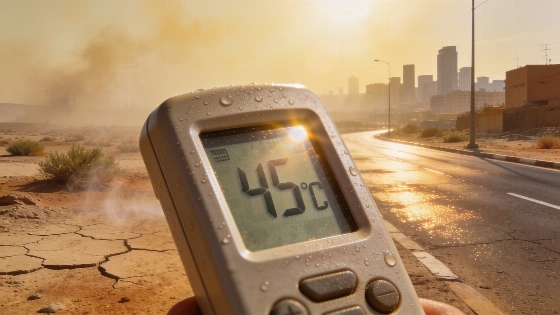
Spain is enduring its third major heatwave of the summer, with the Agencia Estatal de Meteorología (Aemet) issuing orange alerts as temperatures soar across the east, south, and Balearic Islands. Maximums between 37°C and 41°C are widespread, but interior areas of Valencia and Murcia could see the mercury reach 44°C. The current episode, which began Tuesday, is expected to be brief, with a notable drop in temperatures forecast from Friday and a rare respite on Saturday.
The heatwave is driven by a mass of hot, dry air laden with Saharan dust, which has spread from the southeast and Balearic Islands to much of the country. This, combined with intense summer sunshine, is pushing temperatures to exceptional levels, especially in the southeastern third, the Guadalquivir and Ebro valleys, northeastern depressions, Pyrenean valleys, and Mallorca's interior. According to Aemet spokesperson Rubén del Campo, Wednesday will see the most widespread high temperatures, while Thursday could bring the peak, particularly in the Mediterranean region, where local records may be challenged.
Alongside the heat, the presence of calima—dust in suspension from North Africa—has left skies hazy and air quality diminished. Del Campo warns that these fine particles can penetrate deep into the respiratory system and even enter the bloodstream, posing health risks for vulnerable groups. The situation is further complicated by smoke from significant wildfires in central Spain, intensifying the atmospheric haze.
Scattered storms are expected in eastern Spain, but most will be dry, producing little or no rain. These storms may bring lightning, strong gusts, or hail, increasing the risk of new fires. In some areas, mud rain is possible, but the main concern remains dry thunderstorms. Notably, no significant rainfall is forecast for the Sierra Norte de Guadalajara, where a major wildfire has already consumed nearly 30,000 hectares. Most storm activity will be concentrated further east, particularly in the Valencian Community.
Relief is on the horizon. By Friday, a cooler Atlantic air mass is set to move in, shifting winds to the west and lowering temperatures by 4 to 5 degrees. While it will still be warm in some regions, Saturday could feel unusually cool for July in western Spain, with highs of just 30°C to 32°C. This marks the first day since June 1—when the climatological summer began—that temperatures are expected to fall below the seasonal average, breaking a persistent pattern of above-normal heat.
This summer has already set multiple records for both daytime and nighttime temperatures. Between June 1 and July 15, Spain experienced its hottest early summer since records began, surpassing the extreme heat of 2015. Several weather stations have reported their highest minimum temperatures for July, with many nights failing to drop below 20°C or even 25°C. For example, Bilbao Airport recorded a July minimum of 22.3°C on July 10, exceeding the previous record set in 2024. Logroño Airport reached 23.9°C on July 12, while Vitoria-Gasteiz saw its warmest July night since 1973, with a minimum of 20.4°C. Girona and Lleida airports also broke records, registering 24.4°C and 25.7°C respectively, and Murcia reported a minimum of 26.9°C on July 16. On July 19, A Coruña Airport experienced its first tropical night in July since 1972, and Castelló-Almassora did not drop below 26.9°C.
These developments come as Spain continues to grapple with the combined effects of heat, dust, and wildfire risk. The persistence of calima and the threat of dry storms have become recurring challenges, as highlighted in recent coverage of Saharan dust and muddy rains affecting the country. For further context on how these weather patterns have disrupted daily life and air quality, see the report on Saharan dust and muddy rains sweeping across Spain.
Spain's experience this summer underscores the growing volatility of weather patterns in the region. The combination of record-breaking heat, persistent dust, and limited rainfall has heightened concerns about public health, wildfire management, and the resilience of infrastructure. According to the Spanish Meteorological Agency, such intense and prolonged heat events are becoming more frequent, with 2026 already standing out as an extraordinary year for temperature extremes. Residents and authorities remain alert as the country awaits the promised relief later this week.