Spain records about 285,000 fragility fractures each year. Specialists say too many eligible patients still miss treatment and follow-up after a first fracture.
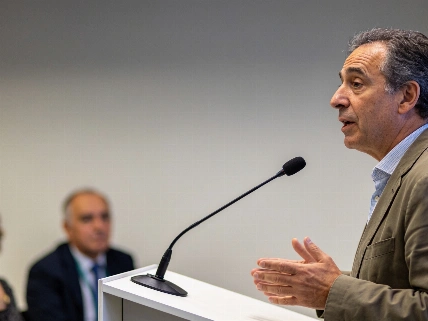
At a Madrid seminar organized by Gedeon Richter, specialists warned that too many eligible osteoporosis patients in Spain go without treatment or follow-up after a first fragility fracture. Spain records around 285,000 fragility fractures each year, and timely care after the first one can help prevent another.
Almost three million people are estimated to live with osteoporosis. Among people over 50, the disease affects 10.7%: 18.6% of women and 2.6% of men.
The Sociedad Española de Reumatología cites a similar estimate, putting the number of people with osteoporosis at roughly three million and annual fragility fractures at about 300,000.
The first fracture is the missed chance.
Dra. Irene Llorente, a rheumatologist at Hospital Universitario de Getafe, called it a sentinel fracture. It can identify patients at especially high risk. The chance of another fracture rises after the first and is particularly high during the next two years.
Specialists want a coordinated system for secondary prevention: identifying patients, investigating their condition, assessing risk, starting treatment when needed and checking progress. Spanish clinical recommendations also treat a fragility fracture as a reason to assess bone health and consider therapy. It is an orthopaedic event with broader consequences. Recommendations from the Sociedad Española de Reumatología also address falls, including vision checks, reviews of medicines that may cause dizziness or instability, suitable footwear and removing hazards from the home.
The treatment gap remains wide. An estimated 1.17 million women over 50 who qualify for therapy are not receiving it. Among eligible women, 64% remain untreated. Treatment coverage rose to 58% in 2024. Dra. Cristina Carbonell, president of the Sociedad Española de Investigación Ósea, or Seiomm, says that is not enough.
Family doctors already carry part of the load. The recorded incidence is 10.91 cases per 1,000 people. For a doctor serving 1,500 patients, that means six or seven fragility fractures each year, Dra. Cristina Carbonell says.
Spain's ageing population could raise the annual total to 370,000 within four years. Projections from the Instituto Nacional de Estadística, or INE, show the share of people over 65 rising from 21% currently to 26% in 2034.
The hospital visit is not the end.
One year after a hip fracture, mortality reaches 20.3% among men and 14.4% among women. Also, 62.7% of patients do not regain their previous quality of life, and another 40% cannot walk without help.
The damage reaches homes and workplaces. Fragility fractures account for 355,306 days of sick leave. Family carers spend between 35 and 40 hours a week providing support. Half of primary carers experience severe overload. Women make up 78% of carers in Spain.
Some patients also care for relatives, adding another responsibility after losing their independence. Spanish osteoporosis research estimates the annual cost associated with osteoporosis and its fractures at around €4.3 billion. The figure covers medical care and the wider social and economic effects of these fractures.
Fracture liaison services offer a practical route through the health system. They find people who have suffered a fracture and assess whether they need therapy. Bone density alone is not enough.
Doctors also need the patient's clinical history and other risk factors. They can use bone densitometry, vertebral imaging, laboratory tests and FRAX. The FRAX tool estimates the ten-year risk of a fracture, but it has limits: doctors must interpret the result through clinical judgment.
Spanish clinical materials identify DXA densitometry and FRAX as tools that can detect high risk before a first fracture and help guide treatment decisions.
Treatment may include antiresorptive medicines such as bisphosphonates and denosumab. Other options include intravenous zoledronic acid or medicines that stimulate bone formation. The choice depends on age, sex, comorbidities, the location and severity of fractures, bone mineral density and the likelihood of further events.
Specialists support early treatment for people at high or very high risk. They also recommend sequential treatment plans and repeated risk checks during follow-up. Recommendations from Seiomm and other Spanish clinical bodies say the final choice must be individualised. Calcium intake alone is not enough.
Prevention goes beyond supplements. Spanish guidance supports suitable nutrition and individually indicated vitamin D. It also recommends resistance exercise, weight-bearing exercise and balance training. Smoking cessation and moderation of alcohol may also form part of care, alongside treatment of relevant conditions and medication when clinical criteria are met.
Men face the risk too. Expert materials estimate that after age 50, a fragility fracture may affect about one in three women and one in five men. Assessment and prevention so apply to both sexes, not only to women after menopause.
The message from Madrid is direct: a first fracture should start a system response, not end care. Spain has millions of people with osteoporosis, hundreds of thousands of fractures each year and a large untreated group.