Around 1,500 people gathered outside Spain’s Ministry of Transport to demand accountability for the collision of an Iryo train and an AVE on the Madrid-Seville line. The disaster in Urda, Toledo, had killed at least 68 people by the time town halls across the country held a minute of silence at 20:00. At least 180 people were injured, and Castilla-La Mancha authorities reported that 58 injured people required hospital treatment.
The collision occurred at 8:53 a.m. on the Madrid-Córdoba high-speed line between Los Yébenes and Urda. The trains were Renfe AVE 02080, the 8:00 a.m. Madrid Atocha-Sevilla Santa Justa service carrying 397 passengers, and Iryo service 6076, which left at 7:54 a.m. carrying 147 people. The AVE struck the rear of the stationary Iryo train, derailing several carriages, some of which fell down an embankment. Authorities have warned that the death toll could rise as the wrecked carriages are moved and search work continues at the site. The Urda collision was Spain’s second fatal rail accident of 2026, following the Adamuz crash in Córdoba, where 46 people died. In Santiago de Compostela, the vigil recalled the 2013 Angrois crash.
Transport Minister Óscar Puente said a computer malfunction stopped the LZB train-protection system, which covered a 63-kilometer stretch, at about 8:30 a.m. The failure automatically halted trains on the section. According to the minister’s account, a central control center later authorized the AVE to resume without speed restrictions, although a stop signal reportedly remained active. Todo Alicante reported that the control room authorized the train to continue at 8:36 a.m. The Civil Guard opened an investigation and questioned an Adif controller, examining communications between the control room and the train drivers. Puente said the train could have been traveling at up to 200 kilometers per hour on that stretch; its speed at the moment of impact remained under investigation.
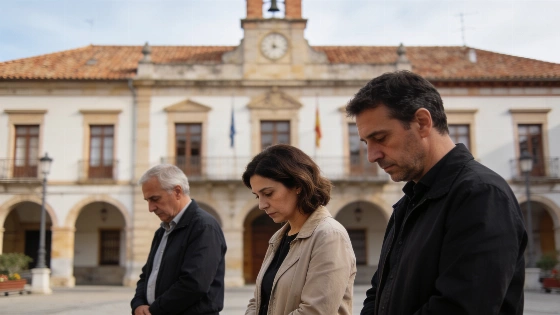
The Federation of Spanish Municipalities and Provinces (Federación Española de Municipios y Provincias, FEMP) called on councils nationwide to join the tribute. Urda’s mayor, Manuel Galán, thanked those who worked at the scene. He praised cooperation between administrations. He also offered condolences to victims’ families and wished the injured a quick recovery.
In Toledo, about 400 people gathered outside the city hall. Regional president Emiliano García-Page attended. Ministers Milagros Tolón and Isabel Rodríguez were also there. In Huelva, officials and residents observed five minutes of silence. The Adamuz crash remained on people’s minds there: nearly half of its 46 victims came from Huelva province. Some attendees blamed politicians, particularly those supporting the government. Mayor Pilar Miranda said the city had experienced a similar tragedy in Adamuz and called for another such disaster to be prevented.
Other ceremonies drew large gatherings. About 1,000 people assembled in Zaragoza’s Plaza del Pilar, where some held signs calling for Óscar Puente’s resignation. Aragón president Jorge Azcón said the immediate focus should be mourning and solidarity with Castilla-La Mancha. He also called for an explanation of the crash. Ciudad Real’s Plaza Mayor drew about 2,000 people.
The protest outside the ministry had first circulated on social media through Falangist youth groups and was also promoted by Revuelta, a far-right youth organisation. It passed without reported incidents under a large security operation. Attendees directed insults at Transport Minister Óscar Puente and Prime Minister Pedro Sánchez.
In Huelva, the disaster’s toll was especially personal. The city has also followed the recovery of victims from older losses, including six bodies found in a Cáceres cemetery excavation covered in the Cáceres report.
Santander’s tribute drew more than 200 people, while about 250 gathered in Logroño. The latter ceremony began 15 minutes late because of the funeral of former mayor Tomás Santos.