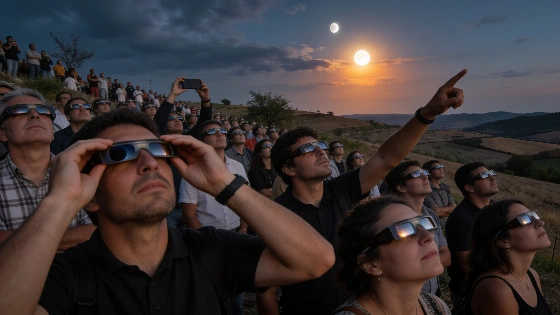
On August 12, Spain will witness its first total solar eclipse in over a century. Authorities brace for record travel, packed hotels, and strict safety rules. The event will test emergency services and local infrastructure.
Millions across Spain are set to experience a rare total solar eclipse on August 12, the first of its kind visible from the peninsula in more than a hundred years. The phenomenon, expected just after 20:25, will plunge a wide swath of northern Spain into darkness for up to 1 minute and 45 seconds, drawing both residents and international tourists to key observation points from Galicia to the Balearic Islands.
Demand for accommodation in the eclipse’s path has soared, with many rural hotels and guesthouses fully booked for over a year. In provinces like León, Palencia, Burgos, Soria, and southern Aragón—areas known for clear skies but low population—local businesses are preparing for an unprecedented influx. Some hotel prices have multiplied six to eight times, with last-minute seekers facing rates of €900 per night in Soria and €500 in Zaragoza, according to recent booking data.
Authorities are treating the event as a major logistical challenge. The central government’s Interministerial Commission, together with regional and local officials, has coordinated hundreds of official viewing sites to manage crowds and minimize disruption. The Directorate General of Traffic estimates up to 1.5 million additional journeys on eclipse day, a figure comparable to peak holiday travel. However, predicting exactly where crowds will gather remains difficult, raising concerns about congestion and emergency access.
Safety is a top priority. In response to heightened wildfire risk during Spain’s dry, hot summer, several regions have banned motor vehicles from protected natural areas, prohibited bonfires, and cancelled large festivals. The Interior Ministry will deploy 24,000 Guardia Civil officers to enforce rules and ensure public order. During a recent briefing, the minister urged citizens to act responsibly and strictly follow environmental protection measures.
At the heart of the event, astronomers like José Ángel Docobo will guide public viewings at iconic sites such as the Altar del Sol in Lalín (Pontevedra) and the Playa de las Catedrales in Ribadeo (Lugo). Docobo will comment live from Lalín, with his feed broadcast to Ribadeo, where the eclipse will last longest. Organizers have prepared a backup plan to stream images from the Javalambre Observatory in Teruel if clouds obscure the view in Galicia, though forecasts currently predict clear skies.
Experts emphasize that witnessing totality is a unique experience, distinct from partial eclipses. For many, including seasoned astronomers, this will be their first chance to see the solar corona without traveling abroad. The event’s timing—just before sunset—means observers must find unobstructed western horizons for the best view. Astrophysicists recommend traveling into the path of totality, as even a 99% eclipse outside the zone does not compare to the full effect.
Economic impact is expected to be significant. A recent study estimates the eclipse could generate €421 million in added value, with over a million extra visitors drawn to Spain’s interior. Local businesses see the event as an opportunity to showcase regional heritage, nature, and cuisine, hoping to attract repeat tourism beyond the eclipse itself.
Emergency services are on alert for risks beyond traffic and fires. Large gatherings in rural areas can strain infrastructure and complicate rescue operations. Spanish authorities are mindful of the massive traffic jams and accident spikes seen during recent U.S. eclipses. The Directorate General of Traffic has advised against unnecessary travel and strictly prohibits parking on road shoulders to keep routes clear for emergency vehicles. In Madrid, some municipalities have already cancelled public eclipse events due to fire concerns, as detailed in this recent report on local cancellations.
For those planning to observe, experts advise arriving early, using certified eclipse glasses, and focusing on the experience rather than photography. During the brief period of totality, it is possible to glimpse the solar corona and even nearby planets. The next total solar eclipse visible from Spain will occur in the far south next year, followed by an annular eclipse in 2028, making this summer’s event a rare opportunity for much of the country.
Spain’s eclipse comes at a time when astronomical tourism is gaining popularity, offering a boost to lesser-known regions. The event highlights the need for careful planning and respect for natural spaces, especially as climate risks and mass travel intersect. As the nation prepares for the day of “two nights,” the balance between public enthusiasm and safety remains at the forefront of official efforts.