Spain may face a housing shortfall of more than one million homes by 2028. The Bank of Spain says demand is running ahead of supply, pushing home prices further beyond household incomes.
Spain's housing deficit could exceed one million homes by 2028 if current trends continue. Banco de España deputy governor Soledad Núñez gave the warning at the Forbes Economic Summit. She said the main problem is not a lack of demand. Residential construction is failing to keep up.
The institution had been working with an estimated shortfall of around 750,000 homes. Between 2026 and 2028, that gap could grow by another 300,000 dwellings. The total would then pass one million.
CaixaBank Research, using data from Spain’s INE and the Ministry of Transport, estimated that the gap between new households and permits for new construction reached almost 98,000 homes over the latest 12-month period.
The pressure is already showing in the part of the market that matters most to households: access to housing.
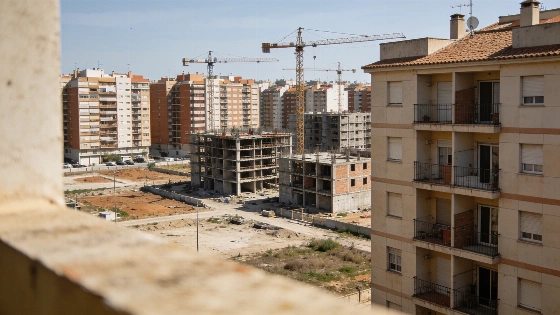
New households formed during a period of rising migration are adding demand. Construction has not kept pace. Cranes are far less common than they were during the expansion before the property bubble, but the shortage is now pushing prices higher. The gap between household earnings and home prices is growing. Savills puts the current deficit at about 755,000 homes and says it could pass 850,000 by the end of 2027.
Núñez singled out younger people and new residents as groups finding it harder to buy. The cost of buying a home is rising faster than household income, she said. This is not just a recent shift. Since 1980, real disposable income in Spain has multiplied by 1.8, while real house prices have multiplied by 3.5.
Construction activity is also falling short of the pace needed to absorb demand. One industry estimate puts the number of permits for new homes issued in 2026 at 141,135, a level described as significantly below the rate at which new households are being formed.
The comparison with the euro area makes the gap clearer. Real disposable income there has multiplied by 1.6 since 1980. Real house prices have multiplied by 1.8. In Spain, property values have risen much faster, helping explain why homes have become less affordable even as incomes have grown.
El Debate, citing Núñez's remarks, also reported that real home prices in Spain had reached levels comparable with 2005 because supply was too limited.
The housing warning comes as domestic demand remains an important part of the economy, as described in an earlier economic report. Stronger demand does not solve a market where the basic problem is the number of homes available at prices households can afford.
Independent research shows how large the construction task has become. OBS Business School estimates that the accumulated shortfall has been around 740,000 homes since 2021. It says more than 230,000 homes a year would be needed to make a meaningful dent in the deficit.
Núñez also spoke about changes in financial intermediation. She said savings should be directed toward productive investment and questioned whether neobanks and other fast-growing intermediaries always do that. She called for more information about where their money goes, greater transparency and supervision that keeps risks from moving outside the banking system.
Private credit is growing in information technology, professional services and manufacturing. The Bank of Spain views the wider range of financing sources positively. It also notes that a significant share of the money comes from funds outside the euro area and that lending is heavily concentrated among the biggest providers. The financial sector will help fund technological change. It will also need to separate projects with real productive potential from expectations that may be hard to sustain.
The figures point to a simple problem. Spain cannot ease the housing affordability crisis through demand or credit alone while construction remains too slow. A deficit estimated at 750,000 homes could pass one million within two years. Prices have also risen far faster than incomes over several decades. For young people and new residents, this is not an abstract change in the market. It means fewer chances to buy a home. Until more homes are built, prices will remain the main pressure on Spanish housing.