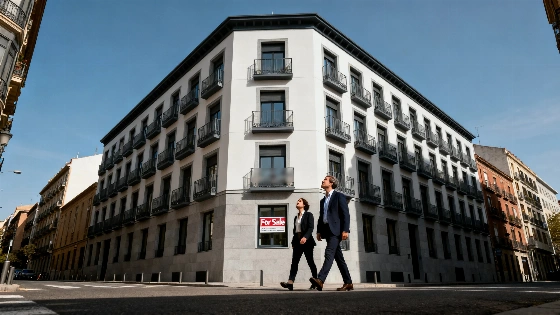
Housing sales in Madrid, Barcelona, and Valencia plummet due to prices. Housing sales in Madrid, Barcelona, and Valencia have dropped amid soaring prices. Economist Gonzalo Bernardos notes that the middle class is unwilling to pay such high amounts. New construction is not meeting demand.
Spain’s largest cities—Madrid, Barcelona, and Valencia—have seen a significant decline in home sales. According to economist Gonzalo Bernardos, demand among the middle class has come under pressure due to high prices and limited supply. As a result, by his estimates, sales in Madrid have dropped by 15.4% over the year, in Barcelona by 10.8%, and in Valencia by 7.2%.
Bernardos emphasizes that this trend does not reflect the situation across the entire country, but he warns: in 2026, the volume of real estate transactions could fall by about 8%. Among the reasons, he cites not only internal factors but also the impact of external events, particularly the economic consequences of the war against Iran.
Despite the decline in market activity, there is no reason to expect a drop in prices. The expert believes that housing costs will continue to rise, although at a more moderate pace—about 5% per year. The main reason is the persistent gap between demand and supply: in 2026, the number of new housing units under construction will not exceed 200,000, which is clearly insufficient for major cities.
The issue of housing affordability is becoming increasingly acute for the middle class, which is not willing to accept current price levels. This is also affirmed by experiences in other areas: earlier in Madrid, families of patients with serious illnesses faced cuts in support, which also sparked public outcry (more on government decisions in the social sphere).
To understand the scale: according to the National Institute of Statistics, in recent years around 600,000 properties have been sold annually in Spain, with Madrid, Barcelona, and Valencia accounting for a significant share of transactions. Housing prices in these cities are rising faster than the national average, while the share of new apartments in total supply remains low. With limited construction and high property costs, housing affordability for most families continues to decline, which may impact demographic and economic trends in the coming years.