DGT data put Spain's current registration sequence at NTX on 3 November. The N combinations must run through NZZ before the sequence advances to PBB, which could appear late in 2026 or early in 2027.
The pace depends on how quickly vehicles are registered; there is no fixed calendar for a change of letters. Spain typically records between 80,000 and 120,000 registrations a month, with activity often picking up near month-end and quarter-end. The DGT's plate sequence tracks allocations, while road enforcement is a separate matter; a Mossos tachograph case concerned a lorry driver's hours.
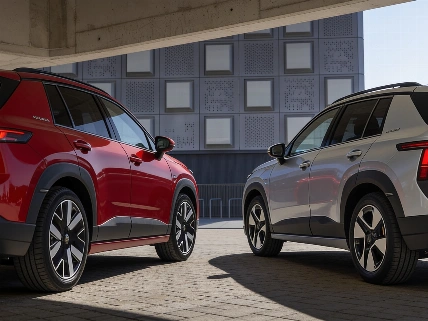
New-car demand is setting the pace. The Asociación Española de Fabricantes de Automóviles y Camiones (ANFAC) reported 98,487 passenger-car registrations in October, 1.8% more than in October 2025. The market had recorded year-on-year growth for five consecutive months. Separately, the Ministry of Industry and Tourism's vehicle-statistics portal listed September 2026 production data on 31 October, including files titled “Avance_unidades(septiembre2026)” and “Avance EFV-Datos de Turismos(septiembre2026)”.
From January to October, 1,010,545 new passenger cars were registered across Spain, a rise of 6.2% on the same period in 2025. Industry associations expect the 2026 total to exceed 1.2 million, but that remains a forecast rather than a completed result. The Ministry of Industry and Tourism also opened a consultation on a proposed Programa AUTO+, a direct-grant aid scheme under the framework of Royal Decree-Law 7/2026 of 20 March.
Vehicle administration also covers homologation rules. In October and November 2026, the Ministry of Industry and Tourism listed a consultation on updating annexes to Royal Decree 750/2010 of 4 July. The decree governs documentary and administrative requirements for vehicle certification, including national type approval, individual approval and national short-series approval.
The national alphanumeric system has been in use since 18 September 2000. Each plate combines four numbers with three letters and does not identify a province. Vowels are excluded, along with the letters Ñ and Q, to avoid confusing or unwanted combinations; the system allows 80 million possible combinations. Once the number sequence runs from 0000 to 9999, the letters advance.