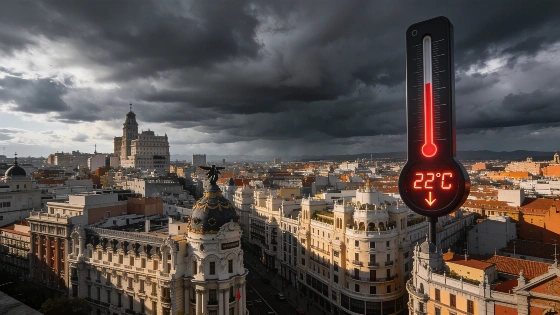
Spain is facing another round of summer-like heat in October, with temperatures set to rise 5 to 10 degrees above average. The country has already broken records this year for the number and length of heatwaves.
Spain is heading into another stretch of unusually high temperatures, with forecasts calling for readings 5 to 10 degrees above the October average. The heat, which started in spring and barely let up all summer, is now pushing well into autumn, according to the national weather agency Aemet. This year has already set a new record: 61 days have met the official criteria for a heatwave, far surpassing the previous high of 41 days in 2022. The scale of 2026's heatwaves stands out even in a decade of broken records.
After a short break, the heat is returning across much of Spain. While the coming days may not reach the extremes of early September, when several records fell, Aemet warns that many areas will still see temperatures well above normal for this time of year. In the Guadalquivir valley, highs could again top 35°C. Tropical nights—when temperatures stay above 20°C—are expected along the southern Mediterranean coast, the lower Guadalquivir, and both the Canary and Balearic Islands. Forecasts suggest these warm nights will continue, especially in the south and Mediterranean regions.
On September 2, El Granado matched Spain's all-time September temperature record at 45.7°C, marking the highest reading of the year.
AEMET
Friday brings a brief pause, with no weather alerts in effect. High pressure from the west is keeping skies mostly clear over the Peninsula and Balearic Islands. Only a weak front will bring some clouds to northern Galicia and the Cantabrian area, but these should clear quickly. In the Canary Islands, the usual pattern holds: cloudy in the north of the mountainous islands with light rain fading, and clearer skies elsewhere. Maximum temperatures will drop in the Canaries but rise across the Peninsula and Balearics, except for the Cantabrian coast and much of the southern third, where little change is expected. Minimum temperatures will climb in the northern half, except in the Ebro and eastern Cantabrian regions.
This run of summer-like weather is not a one-off. Longer, hotter summers have become more common for decades, with each year pushing the limits further. Spain’s climate records have been rewritten again and again. As recent reports note, even short spells of cooler weather are now rare. According to Aemet, the summer of 2026 was Spain’s hottest on record, with an average temperature of 24.5°C from June through August—0.3°C higher than the previous record in 2025 and 2.4°C above the 1991–2020 average.
The effects are immediate for residents and businesses. Prolonged heat puts pressure on energy systems, disrupts farming cycles, and raises the risk of drought and wildfires. The return of tropical nights means less relief for vulnerable people, especially in cities where heat lingers after dark. While Aemet’s forecasts offer some warning, the reality is clear: Spain’s climate is shifting, and the lines between seasons are fading. What was once rare heat is now routine, and the country’s infrastructure, economy, and daily life are having to adjust quickly.
Official data show that in 2026, extreme heat was not just an isolated episode but a persistent seasonal trend. Four separate heatwaves affected mainland Spain and the Balearic Islands, with extremely high temperatures recorded on roughly two out of every three days during the summer.
Reuters