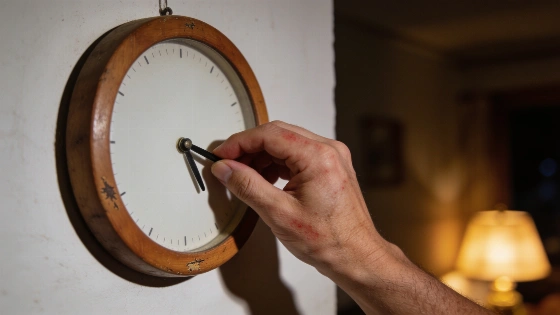
Spain will move to winter time overnight from Saturday 24 October to Sunday 25 October. At 03:00 clocks go back to 02:00, giving people an extra hour in bed. An EU plan to end the seasonal change has not taken effect.
An EU proposal to end seasonal clock changes did not take effect because member states failed to agree. Spain’s clocks are due to go back overnight from Saturday 24 October to Sunday 25 October, under the EU’s continuing seasonal time arrangement.
The change happens at 03:00 in mainland Spain and the Balearic Islands, when clocks move back to 02:00. The Canary Islands make the same change according to their local time zone. People gain an hour overnight, while daylight ends earlier in the evening as Spain enters winter time.
The adjustment takes place twice a year: clocks move forward in March for summer time and back in October. The historical aim is to align waking and working hours more closely with available daylight and reduce lighting demand. The European Commission has described the energy savings as marginal under modern conditions. Patterns of electricity use have changed, as have heating and cooling needs; evening routines have shifted too.
The European Commission raised the possibility of ending the practice in September 2018 after a public consultation that received about 4.6 million responses. Around 84% of respondents favored ending the twice-yearly changes. The consultation recorded public preference but did not itself change EU law. The Commission initially proposed 2019 as a target, then discussions moved toward 2021. The proposal did not take effect because member states failed to agree on a common approach, including whether to retain permanent summer or standard time.
The European Parliament voted in 2019 in favor of ending the seasonal changes, with 2021 initially envisaged as the end date. The vote did not complete the legislative process: agreement among EU member states was also required, and the Council has not reached the necessary common position. Directive 2000/84/EC, dated 19 January 2001, therefore remains the legal framework for the coordinated spring and autumn clock changes.
In October 2025, Prime Minister Pedro Sánchez renewed Spain’s call for the EU to end seasonal clock changes from 2026. His proposal concerned the common European practice and would not, by itself, change Spain’s time zone or override EU rules. Sánchez argued that the system offered little energy saving and harmed health and everyday life. The clock change remains scheduled under the existing EU framework.
The Spanish government established an expert commission on time arrangements on 20 March 2019. It concluded that a decision should not be taken without shared consensus, given the need to coordinate with other European countries and choose between permanent summer and standard time. Seasonal changes remain scheduled in Spain for 2026.
The Sociedad Española de Sueño has warned that clock changes can disrupt sleep and the sleep-wake cycle. Reported effects include irritability and difficulty concentrating; insomnia has also been reported, along with reduced work performance. The health concerns discussed include associations with obesity and diabetes. Other concerns include cardiovascular events and stroke, as well as depression and anxiety. The spring change removes an hour of sleep. The autumn change adds an hour overnight but still shifts light exposure and daily routines.