Spanish drivers shell out an average of 10,200 euros more for an electric car than buyers in China. Even with new budget models, the price gap stays wide, showing a deep split in the global EV market.
Electric cars cost much more in Spain than in China. On average, Spanish buyers pay 52% more for an EV than drivers in China. PwC Autofacts puts the difference at 10,200 euros per car. The European average price is 29,800 euros, while in China it is just 19,600 euros.
European carmakers have started rolling out cheaper electric models. Chinese brands entering the market have pushed established companies to rethink their prices. But the numbers show the gap is not closing quickly. PwC’s study looks at registrations in France, Germany, Italy, Spain, and the UK. It uses German entry prices for comparison and leaves out VAT, focusing on July 2026 data.
For Chinese electric vehicles imported into Spain, a 10% customs duty, additional anti-dumping or compensatory tariffs by brand, and 21% VAT are applied, significantly raising the final price for Spanish buyers.
China leads the world in cheap electric cars. Four of the ten top-selling battery electric vehicles (BEVs) in China during the first half of the year started below 10,000 euros. These include the Geely EX2, BYD Yuan Up, Wuling Hongguang Mini EV, and Changan Nevo Q05. The MG4 launched at just 7,900 euros. The Geely EX2 was China’s best-seller, with 194,159 units sold and a starting price of 7,400 euros. In Europe, the Tesla Model Y led the market with 61,379 units sold at a German entry price of 33,600 euros. That’s almost four times the price of China’s top seller.
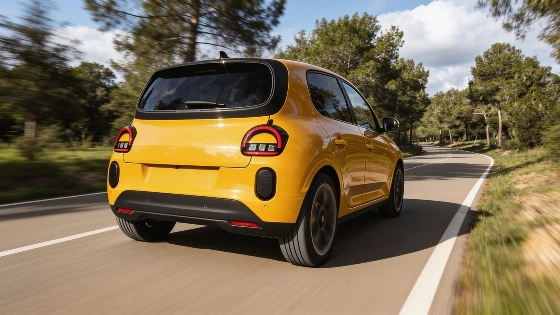
But the two markets are not selling the same kind of cars. China’s market is packed with budget electrics for the masses. In Europe, most sales are still in higher-priced segments. This is the main reason for the price gap. Even as new models like the Renault 5 (23,500 euros), Citroën ë-C3 (16,900 euros), and Leapmotor T03 (15,900 euros) arrive, the average price stays high. Recent reviews of the European and Spanish markets show that some entry-level EVs under 20,000 euros are now available in Spain. But the average remains high because most sales are for pricier trims and models.
Prices are shifting, but the gap holds. In the first quarter, PwC found the average price of the ten best-selling electrics was 30,600 euros in Europe and 21,100 euros in China. In the second quarter, Europe’s average dropped to 29,800 euros, but China’s fell further to 19,600 euros. The 10,200 euro gap stayed the same. Sector analysts say Europe’s higher average is not due to one expensive model, but to a sales structure that favors higher-priced cars. China’s market is much deeper in the affordable segment.
In 2026, Spain launched the Plan Auto+ program, offering subsidies for the purchase of electric and electrified vehicles. This initiative is expected to partially ease the price barrier for Spanish consumers, though many of the lowest advertised prices for new EVs still depend on financing or special conditions.
Spain is not alone in facing high EV prices. The whole European market is in the same spot, as shown in a recent report on new brands entering Spain. The root problem is Europe’s reliance on imported raw materials for EV production. This keeps costs high, even as more models and brands compete. Industry experts in top automotive publications say Chinese brands are putting the most pressure on EV prices in Europe. European makers are adjusting their prices, but the structural gap is still there.
Right now, Chinese buyers can pick from a wide range of cheap electric cars. Spanish and European buyers are still shut out of the lowest price brackets. Until Europe fixes its supply chain and production costs, truly affordable electric cars will stay out of reach for many. PwC’s numbers are clear: the real price revolution in electric vehicles is happening in China, not Spain.