Spain’s Economy Minister Carlos Cuerpo has promised to do everything possible to keep the Seat brand alive after Volkswagen admitted it may discontinue the Spanish marque. The government’s approach faces a major test as the auto industry shifts to electric vehicles.
Volkswagen’s admission that it might end the Seat brand has put the Spanish government on alert. Carlos Cuerpo, Vice President and Minister of Economy, responded quickly, saying Spain will not let Seat disappear without a fight.
At 'Los Desayunos de Efe y RTVE', Cuerpo said the government is ready to make "every necessary effort" to keep Seat operating in Spain. Volkswagen’s warning has raised immediate concerns about jobs and the future of Spain’s car industry.
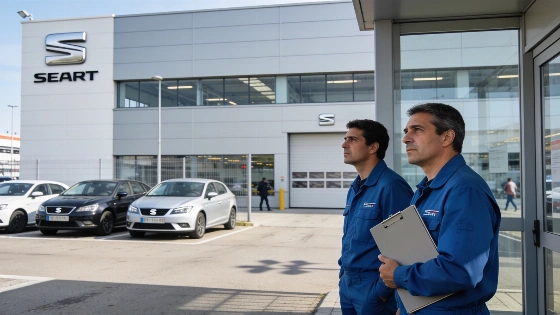
In 2022, Seat produced over 480,000 vehicles, making it one of the top car manufacturers in Spain.
Seat is more than a car brand for Spain. Even under Volkswagen’s ownership, it remains a symbol of Spanish industry and identity. Cuerpo called Seat a "traditionally Spanish" brand and said its survival matters not just for factory workers but for the entire supply chain, including Spain’s strong components sector.
The timing is difficult. Volkswagen’s doubts come as the global car industry shifts rapidly to electric vehicles. Cuerpo said many countries have struggled to adapt, but argued that Spain has stayed ahead, helped by targeted investments from the national Recovery Plan and a push for industrial decarbonization.
According to Cuerpo, these efforts have made Spanish factories some of the most efficient in Volkswagen’s global network. "This is a guarantee that Seat can remain in our country and that jobs can be preserved," he said, stressing the government’s determination to protect both the brand and the wider network of suppliers and manufacturers.
According to a report by El País, Volkswagen has invested more than €10 billion in Spain over the past decade, with a significant portion directed toward electrification and modernization of production lines. This investment has positioned Spain as the second-largest car producer in Europe, after Germany.
Economic data offers some reassurance. Cuerpo said internal forecasts point to 0.6% GDP growth in the third quarter, keeping Spain on track for a 2.6% annual increase. Inflation and energy costs are still a concern, especially with ongoing geopolitical tensions, but the government has extended support measures for families and businesses. For example, the diesel tax rebate was raised to 20 cents per liter in September after a sharp price spike in July.
These measures are meant to shield households and companies from the worst effects of global volatility. Cuerpo explained that the government’s support is flexible, with automatic triggers to increase aid if fuel prices rise above certain levels. This approach was used again in September, showing the administration’s willingness to step in when needed.
On the next State Budget, Cuerpo gave no firm date, saying only that it would be presented "as soon as possible." The uncertainty around Seat adds another challenge to Spain’s economic planning, especially as families look for ways to manage rising costs—a topic covered in a recent analysis of post-summer car expenses.
As reported by elespanol motor, the government’s public support for Seat is a clear signal to Volkswagen and the industry that Spain is not willing to lose a national brand without exhausting every option. Still, Seat’s future will depend on the economics of the electric transition and Volkswagen’s global plans. For now, Cuerpo’s intervention buys time and some reassurance, but the real decision will come when Volkswagen’s board weighs its priorities against those of Spanish industry and workers. The government’s credibility now depends on whether it can turn promises into real results for one of Spain’s best-known brands.