Inflation in Spain has jumped to 4.3 percent, the highest level since early 2023, as fuel and energy costs rise sharply. The government faces questions about its relief efforts as households feel the strain.
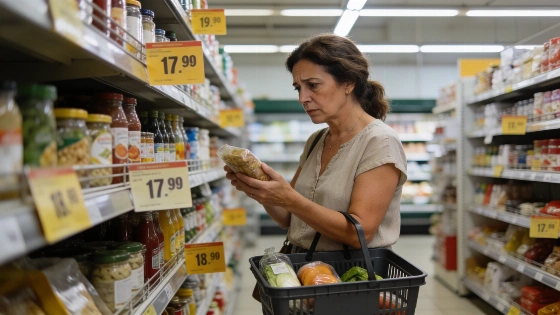
Spanish households are dealing with the steepest August price increase in more than 30 years, as inflation has climbed to 4.3 percent. This is the first time in over a year that inflation has crossed the four percent mark, and higher fuel costs are now a major concern for families and commuters.
Data from the Instituto Nacional de Estadística (INE) shows that annual inflation rose by 0.7 percentage points in August, reaching levels last seen in February 2023. The monthly increase of 0.7 percent is the largest for any August since 1992, continuing a seven-month run of rising prices.
According to INE, diesel prices in Spain surged by more than 30% year-on-year in August, while gasoline rose by 17%.
The main driver behind this jump is the sharp rise in fuel prices. Carburantes and other vehicle fuels are up 21.3 percent compared to last year, with a 10 percent increase just in the past month. This has pushed annual inflation in the transport sector to 9.5 percent, the highest in four years, forcing many Spaniards to rethink their daily expenses.
Energy prices have also gone up. Liquid fuels rose by 8.4 percent in August, while gas and electricity saw smaller increases of 1 percent and 0.7 percent. The Ministry of Economy, Comercio y Empresa links these changes to ongoing energy shocks from the war in Iran and to a statistical effect, since fuel prices had dropped in August last year.
Looking beyond the headline figure, core inflation—which excludes energy and unprocessed food—dipped slightly to 2.9 percent, now 1.4 points below the overall rate. Food and non-alcoholic drinks saw annual inflation rise to 2.3 percent, mainly because fruit and nut prices did not fall as much as usual for the season. The government says food price growth is still under control, pointing to a 0.65 percent drop in the sector since the Middle East conflict began in February.
Funcas notes that Spain's overall inflation in August was higher than the eurozone average, with Spain at 4.3% versus about 3.3% for the euro area, highlighting stronger price pressures domestically.
Spain’s harmonized inflation index (IPCA) now stands at 4.6 percent year-on-year, with a 0.7 percent monthly rise. Since February 2022, Spain’s cumulative inflation is 19.3 percent, just below the eurozone average of 19.6 percent. This comparison shapes both public opinion and policy decisions.
In response to the latest numbers, Vice President and Economy Minister Carlos Cuerpo has repeated the government’s promise to support families. Relief measures under the Plan de Respuesta are still in place, including a 20-cent per liter diesel tax cut and a 5-cent cut for gasoline, both active since September 1. Still, as prices keep rising, these efforts are under growing scrutiny.
For many, the inflation spike is not just a statistic but a daily challenge. The cost of transport, energy, and groceries is now a major worry for Spanish households, similar to what is happening in other European countries. In France, for example, a court recently sided with tenants over excessive rent charges, as reported earlier.
Spain’s inflation surge shows the limits of short-term relief when global energy markets are unstable and supply shocks persist. While government measures may help some, the main causes—geopolitical conflict, energy market swings, and structural weaknesses—are still unresolved. The data is clear: Spanish families are bearing the cost of a crisis with no quick fix, and lasting stability will require more than temporary tax cuts.