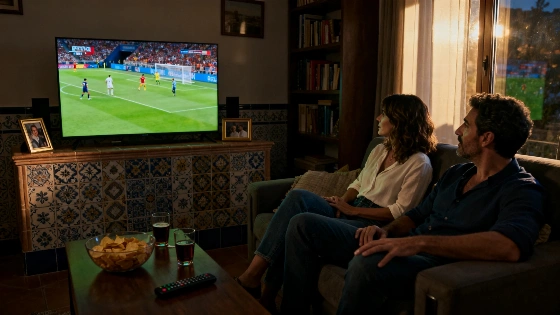
Spanish television is facing a major schedule reshuffle for the World Cup. From Thursday through July 19, La 1, Antena 3 and Telecinco are changing their usual programming to capitalize on football fever or limit audience losses. Today, as the Spanish national team faces Cape Verde, La 1 is canceling its daytime broadcasts: Directo al grano, Valle salvaje, La Promesa, Malas lenguas (except on La 2) and Aquí la tierra will not air. Instead, a special edition of Camino a NY starts at 16:00, followed by the live match and post-game analysis. The regular schedule returns at 20:55 with Telediario, La revuelta and MasterChef. RTVE distributes its football coverage across its television channels and RTVE Play, giving the public broadcaster several platforms for live sports alongside its regular schedule.
On Tuesday, programming changes again: the France vs Senegal match moves La revuelta to prime time, while Al cielo con ella shifts to a late-night slot with reruns. News and a football studio take the place of Aquí la tierra. DAZN broadcasts all 104 tournament matches live and on demand, while RTVE airs one match a day free-to-air, including every game played by the Spanish team, 17 group-stage matches and basic playoff encounters through the July 19 final. The broadcast-rights arrangements have also sparked an institutional dispute: RTVE reported that a court ruling favored the broadcaster and halted UTECA’s effort to block commercialization of the 2026 World Cup.
Football is already lifting ratings for La 1, while the end of the season traditionally brings the finals of popular shows. Supervivientes 2026 wrapped up earlier than usual, MasterChef will determine its winner on June 22, and ¿A qué estás esperando? on Antena 3 has already finished. La isla de las tentaciones is nearing its finale, while Tu cara me suena and La Voz Kids will stay on air until mid- and late July, respectively.
In June, La revuelta moves from Thursday to Friday, making room for the premiere of El perro andaluz with Manu Sánchez. La 1’s evening and late-night slots will see the most frequent changes. Summer premieres include El Grand Prix, Dog House, Maestros de la costura Celebrity and a new project, Ordena tu vida with Inés Hernand. Antena 3 is sticking to its usual formats for now, while Telecinco prepares a series of premieres: Amor o lo que surja launches on June 22, followed by El verano se mueve, De lunes a viernes and El show de Paz with Paz Padilla on weekends. This Thursday brings the release of the Spanish series Ella, maldita alma.
The World Cup is changing more than television schedules. RTVE has already aired the documentary series Denominación de origen. La forja de un sueño, while HBO Max is preparing to release Ultras, a series about football fans. Movistar Plus offers documentaries including El último duelo: Cristiano vs. Messi, El rey Puma and El ascenso de Diego Forlán. For nostalgic viewers, VinTV has brought the animated Naranjito: Fútbol en acción back to screens for the first time since 1982. New fictional projects include Dear England (Movistar Plus) and Brasil 1970: The Third Star (Netflix). Canal Cocina is also launching Picoteo futbolero, with recipes for football evenings.
Football fever is being felt beyond television, too. In Brazil, debate over the starting lineup continues as the team makes its debut at the 2026 World Cup. Ancelotti’s decisions and the intrigue around the attack have already drawn interest from fans and experts.
The World Cup has traditionally been Spain’s biggest television event of the year. In previous years, broadcasts of the national team’s matches have consistently attracted more than 8 million viewers, with audiences reaching 10 million. In 2026, free-to-air broadcasting rights once again belong to RTVE, while pay platforms are expanding their reach through digital services. For TV channels, the tournament offers a chance to refresh programming and test new formats as they compete to hold audience attention. It also poses a challenge.