

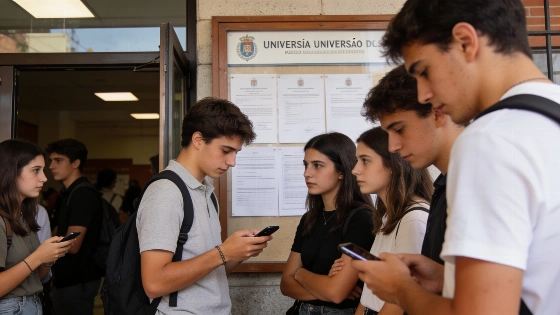
The killing of Claudia Tacoronte in Morelos has led Spanish universities to urgently review their exchange policies. Some have suspended student mobility with the region, exposing gaps in risk communication and institutional awareness.
The death of Claudia Tacoronte, a 21-year-old University of Granada (UGR) student on exchange in Mexico, has forced Spanish universities to reconsider the safety of their international programs. Tacoronte, who was studying at the Universidad Autónoma del Estado de Morelos (UAEM), was the fourth UAEM student killed in 2026. In response, UAEM said it activated internal protocols, contacted Tacoronte's family, the University of Granada, and Spanish consular officials, and called for a full investigation by the state prosecutor with a gender perspective.
Both the University of Granada and the University of La Laguna in Tenerife have suspended all student exchanges with Morelos. UGR quickly canceled the planned exchange of three students for the next semester. Meanwhile, the Autonomous University of Barcelona and the University of Extremadura have kept their agreements in place, and at least two Spanish students remain in Morelos. The Conference of Rectors of Spanish Universities (CRUE) condemned the killing and announced a review of recommendations for exchanges to Mexico, aiming to improve information and controls for students going to high-risk areas.
The Spanish Ministry of Foreign Affairs updated its travel recommendations for Mexico on July 24, 2026, specifically advising against non-essential travel to Morelos due to increased violence and kidnappings.
CRUE, which represents 77 Spanish universities, has announced a review and reinforcement of the guidelines given to students heading to Mexico. A CRUE spokesperson told EL PAÍS that the goal is to strengthen information and controls before sending students abroad, especially to regions flagged for higher risk. The Ministry of Foreign Affairs had already classified Morelos as an area of "special danger" before the incident, citing drug trafficking and a rise in kidnappings, and recommended postponing all non-essential visits.
Official warnings had been in place for months. Spain’s Ministry of Foreign Affairs has advised against travel to Morelos since July, citing increased violence linked to drug trafficking and more kidnappings. The ministry classifies Morelos as an area of “special danger” and recommends postponing all non-essential visits. According to Mexican media and official sources, the investigation into Tacoronte's death is being handled as a possible femicide, meaning authorities are treating it as a gender-motivated crime.
Despite these warnings, communication gaps have become clear. Tacoronte’s younger sister, Lara, posted a video online criticizing both UGR and UAEM for not informing students about the ongoing femicides in the region. She said her sister arrived in Mexico unaware of the risks, and that their parents had been deeply concerned for her safety.
The security situation in Morelos remains critical, with a Gender Violence Alert still active in several municipalities, including Cuautla, Cuernavaca, Jiutepec, Temixco, Xochitepec, Emiliano Zapata, Yautepec, and Puente de Ixtla.
UGR officials told EL PAÍS they did not know about the previous three student murders at UAEM. The dean of UGR’s Faculty of Education, where Tacoronte studied, said students are always informed about dangers in certain countries. But the events in Morelos suggest that institutional awareness and student briefings may not have been enough or up to date.
Other universities have tried to clarify the status of their students. The Autonomous University of Barcelona confirmed that two biology students currently in Morelos have chosen to stay in Mexico, declining the option to return home. The University of La Laguna has frozen its agreement with Morelos, noting that no students from Tenerife had applied for placements there since the partnership began in 2023. The University of Extremadura has not specified whether it currently has students in the region.
There has also been confusion about the whereabouts of Spanish students. The University Rovira i Virgili in Tarragona first reported having two nursing students at UAEM, but later corrected this, saying the students were actually in Puebla, not Morelos. UAEM denied hosting the Tarragona students, highlighting a lack of clear tracking and coordination between institutions.
These events reveal a serious weakness in how Spanish universities manage international exchanges, especially in high-risk destinations. The rapid suspension of programs and the scramble to account for students show the need for better risk assessment and clearer communication. As Spanish institutions review their protocols, the case of Claudia Tacoronte is a reminder that institutional responsibility does not end at the border. The safety of future exchanges will depend on whether universities can close these information gaps and make sure students are properly prepared for the realities they may face abroad.



