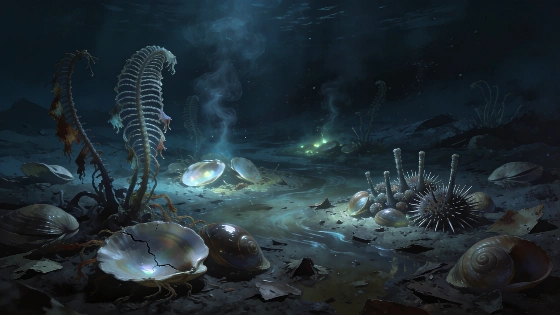
A Stanford-led study uncovers why the Permian-Triassic extinction devastated some marine groups but spared others. The findings link survival to physiological differences, offering new insight into past and future ocean crises.
The largest extinction event in Earth's history, the Permian-Triassic crisis, wiped out nearly all marine species and most land vertebrates 252 million years ago. Yet, the devastation was not uniform: while some groups vanished almost entirely, others survived and later dominated the oceans. New research from Stanford University now provides the most comprehensive explanation to date for this uneven impact, pointing to the physiological and metabolic traits that determined which species perished and which endured.
Published in PNAS, the study combines laboratory experiments with advanced modeling to simulate how ancient organisms responded to rising temperatures and falling oxygen levels in the oceans. The results show that the fate of different marine groups hinged on their bodies' ability to cope with these environmental stresses. Paleozoic fauna, such as brachiopods and crinoids, were adapted to low-oxygen conditions but could not meet the increased oxygen demand caused by higher temperatures. In contrast, modern groups like mollusks and echinoderms, though more oxygen-dependent, possessed more efficient body structures and greater muscular capacity, allowing them to better withstand the crisis.
Before the extinction, the seafloor was dominated by animals typical of the Paleozoic era. Afterward, the ecological balance shifted dramatically, with mollusks, fish, and echinoderms taking over—marking the rise of modern marine ecosystems. The study's simulations closely matched fossil records: groups most sensitive to oxygen loss and warming lost the most habitat and suffered the highest extinction rates, while more resilient lineages survived and expanded. Acidification played a role, but the research indicates it was less decisive than temperature and oxygen changes.
For decades, scientists have linked the Permian-Triassic extinction to massive volcanic eruptions that released huge amounts of carbon dioxide and methane, triggering global warming, ocean deoxygenation, and acidification. However, the question of why these changes hit some groups harder than others remained unresolved until now. The Stanford team's findings clarify that metabolic and physiological differences were key, fundamentally reshaping marine life.
Although the Permian-Triassic event occurred hundreds of millions of years ago, the study draws attention to worrying parallels with current trends. Human-driven emissions are causing ocean warming and oxygen loss, conditions reminiscent of those that triggered the ancient mass extinction. According to the researchers, projections suggest that similar levels of warming could be reached if emissions continue unchecked, though there is still time to alter course.
Understanding how past life responded to catastrophic environmental shifts is not just academic. As recent disasters, such as the deadly wildfire in Almería that forced mass evacuations and tragic losses—detailed in this report on the Los Gallardos fire—have shown, the interplay between environmental change and survival remains a pressing issue. The Stanford study underscores the importance of physiological resilience in the face of rapid change, a lesson with clear relevance as today's oceans continue to warm and lose oxygen.
The Permian-Triassic extinction, often called “la Gran Mortandad,” stands as a stark reminder of how quickly life on Earth can be transformed. While the causes and consequences are now better understood, the warning it offers for the future is unmistakable. As the planet faces new environmental challenges, the ability of species—and societies—to adapt may once again determine who survives and who disappears.