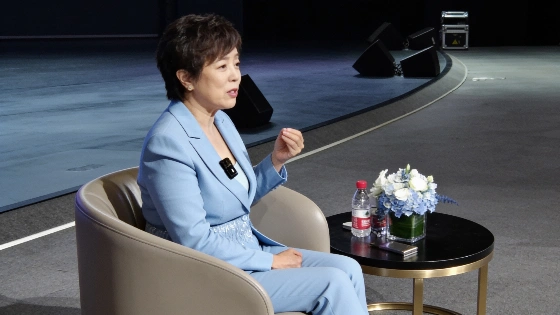
Stella Li, executive vice president of BYD, says the company is ahead of Tesla and European rivals in technology, safety, and production. She outlines a vision for safer roads, rapid global expansion, and making smart cars widely accessible.
Stella Li, executive vice president of BYD, doesn’t mince words: “We do everything better.” She believes BYD’s approach—building most components in-house, constant innovation, and operating at massive scale—has already shifted the balance in the electric vehicle market, even as Tesla’s Model Y remains a top seller in Europe.
BYD now makes about 70% of its parts internally, employs over a million people, and has delivered 15 million plug-in vehicles worldwide. The company’s Blade Battery, which can offer up to 1,000 kilometers of range and a nine-minute full charge for premium models, is one example of its technical focus. Li points to BYD’s insurance-backed guarantees for its autonomous driving systems as proof of confidence: “No one else in the industry puts money on the table to guarantee performance like we do.”
According to Reuters, BYD aims to export more than 2.5 million vehicles in 2027, with the start of production at its Hungarian plant now expected at the end of 2026.
BYD’s ambitions are global. The company is building a new plant in Hungary and is considering further expansion in Europe, including possible acquisitions of existing factories. Li says BYD will soon send R&D engineers to study local road conditions and regulations in several countries, aiming to launch smart vehicles tailored to each market by 2028. BYD’s recent growth in Australia and Brazil, where models like the Dolphin Mini have become bestsellers, shows its international momentum.
Autonomous driving is a key part of BYD’s plans. Its vehicles already have hardware ready for Level 3 autonomy, pending regulatory approval in Europe. “When we launch the Denza Z9GT, it will have the most advanced hardware. Once the software is approved, customers will get it via an OTA update for a small fee,” Li says. While some German brands have pulled back from Level 3 due to low demand, BYD wants to make advanced autonomy widely available and affordable.
BYD is also considering additional production sites in Europe, with local manufacturing seen as key to bypassing high EU import tariffs on electric vehicles. The company’s strategy includes expanding logistics and even developing its own shipping fleet to accelerate overseas deliveries.
Li’s goal is clear: zero accidents on the road. She argues that only broad adoption of autonomous vehicles, supported by government regulation, can make this possible. “We already have 3.15 million cars on the road. With our sales pace, that could double soon. More cars mean better data, and better data brings us closer to zero accidents.”
BYD continues to push its technology. The new Xuanji A3 chip, a 4nm SoC designed for Level 3 and 4 autonomy, is one example. But Li says the aim isn’t to overwhelm drivers with features. “We want the experience to be seamless. The car should understand what you feel and need, whether it’s turning on the air conditioning when you say you’re tired or ordering your favorite coffee with a voice command. Our technology is there to make people feel like the smartest in the world.”
BYD’s reach goes beyond cars. The company is a major producer of electric buses, trucks, and battery storage, and makes about a third of the world’s smartphone components. “If you use an iPad, there’s an 80% chance it was made by us,” Li says. She argues that this scale and integration set BYD apart from competitors.
On hydrogen, Li is direct. BYD’s R&D division, with 120,000 engineers and dozens of patents filed daily, has the technical ability, but she sees hydrogen as a niche rather than a mainstream solution.
For Spanish readers considering their next family car, the difference with traditional brands is clear. While some European manufacturers stick with older models and gradual updates, BYD is betting on fast innovation and aggressive expansion. As reported earlier, the market is shifting as new players challenge old ideas about value and technology.
Li’s message is direct: BYD is not just another carmaker. She sees it as a technology company moving faster and with more ambition than its rivals. The company’s promises of safer roads, smarter vehicles, and affordable innovation are meant as a challenge to the established order. As European and American brands hesitate, BYD is building new factories and filing patents. The question now is whether regulators and consumers are ready to keep up with the pace of change Li and her team are pushing for.