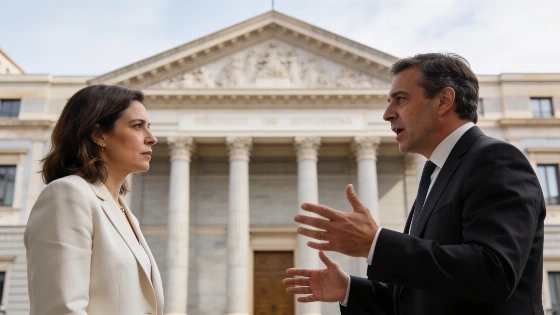
A heated exchange in the Congress courtyard saw Sumar's Alberto Ibáñez accuse PP's Ester Muñoz of turning her back on vulnerable families by voting against key housing decrees. The incident has reignited debate over the tone and tactics inside Spain's parliament.
Alberto Ibáñez, deputy for Compromís-Sumar, did not wait for the press. He walked straight up to Ester Muñoz, the PP's spokesperson, in the Congress courtyard. The vote on housing decrees was minutes away. Ibáñez did not hold back. He told Muñoz, "¡Lo vais a pagar!" and "¡Vais a tener que dar la cara!" The words cut through the usual routine. This was not business as usual. The confrontation forced a rare, public look at both policy and how politicians act when the cameras are off.
Muñoz stood her ground. She told Ibáñez she would "give face" and defended her party’s decision to vote no. Later, she posted a photo of the moment on social media. She said no amount of shouting or pressure would make the PP back down from what they see as defending Spanish citizens. For Muñoz, this was about more than policy. She called out what she saw as verbal aggression in Spain’s democracy.
Один из жилищных декретов предусматривал запрет на выселение уязвимых арендаторов до 2030 года и продление заморозки аренды ещё на два года для действующих договоров.
Ibáñez did not agree with the PP’s version. Sumar sources confirmed he told Muñoz her party would "pay for it at the polls." He said seeing Muñoz cross the courtyard smiling on a day he called grim for struggling families set him off. He asked her, "Are you going to be able to sleep tonight?" Muñoz said yes. That answer only made the divide sharper.
The clash happened just before Congress was set to debate two government decrees meant to ease Spain’s rental crisis. The PP, Junts, and Vox had the numbers to block them. The risk of repeal was real. Prime Minister Pedro Sánchez called on these parties to pick a side: the "social majority" or "speculators." The PP did not budge. They said if the decrees fell, Spain should hold new elections. Reuters reported that Junts made things even harder by demanding a new legislative proposal from the government. That move slashed the odds of the decrees passing right before the vote.
Sumar sources accused Muñoz of showing satisfaction at the idea of hundreds losing eviction protection. The claim raised the emotional stakes. Ibáñez later said, "violence is voting to evict a 90-year-old woman." He pushed the debate from personal conduct to the real impact of votes in Congress.
Reuters связывает появление двух жилищных декретов с недавним общественным резонансом после выселения 87-летней Maricarmen Abascal, что усилило политическую повестку вокруг аренды и выселений. Второй декрет, разрешающий автоматическое и бессрочное продление арендных договоров, изначально считался обречённым из-за отсутствия поддержки в фрагментированном Конгрессе.
This is not the first time Spain’s housing crisis has set off fierce reactions. As previously reported, high-profile evictions have already led to calls for mass protest and urgent reform. Public figures and activists want stronger protections for those at risk.
The latest clash in Congress shows how raw the fight over housing has become. Politicians are taking their battles outside the chamber. When people’s homes are at stake, the line between strong advocacy and personal attack blurs. Every gesture and word now matters. The fallout from these choices reaches far beyond the walls of Congress.