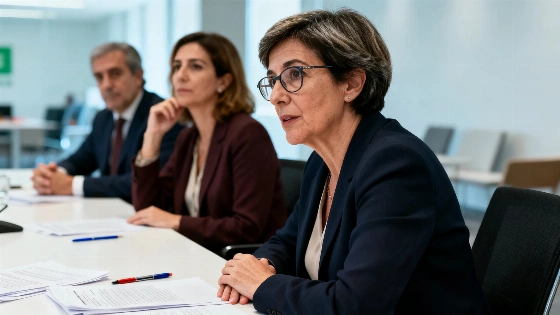
Leadership Change Question Arises Within PSOE-Andalusia After Election Defeat. After their electoral setback in Andalusia, internal discussions within the PSOE about the need for new leadership have intensified. Montero's team remains united for now, but the pressure is mounting. New election campaigns are on the horizon.
Within the Andalusian PSOE federation, doubts have grown about María Jesús Montero's ability to lead the party out of a prolonged crisis after yet another electoral defeat. Former supporters of Susana Díaz, who joined Montero's team after previous purges, are now openly discussing the need for a change in leadership, though they urge not to rush any decisions until the upcoming election cycles have concluded.
According to representatives of the so-called 'Susanismo' faction, Montero has failed to overcome the negative trends set during Juan Espadas' tenure and has not managed to restore PSOE-Andalusia to its former standing. Even though Montero was appointed leader at the initiative of Pedro Sánchez and not chosen in an open primary, her support among former opponents was more a matter of necessity. Now, after the party has posted its worst results in recent years, there is ongoing discussion about finding a new leader capable of preparing the organization for upcoming municipal and possibly early parliamentary elections.
At the same time, despite internal disagreements, Montero's team is showing outward unity. At a recent meeting of the provincial executive committee, there was no open criticism of the current secretary. According to participants, Montero appeared confident and called for a focus on preparing for new elections, stressing the importance of effective opposition work and mobilizing voters.
Supporters of Susana Díaz note that Montero alone should not be held responsible for the failure. They remind that just a year and a half ago, polls predicted an even worse result for PSOE-Andalusia than was actually achieved, and that some of the problems are linked to the legacy of the previous leadership. Nevertheless, this camp believes that leadership renewal is inevitable if the party wants to avoid further losses.
Intra-party sources emphasize that this is not the time for drastic decisions: upcoming municipal elections and possibly early parliamentary elections, which could coincide, are ahead. In their view, launching a leadership change during this period would be a strategic mistake. Only if the parliamentary elections are moved up to this year could the discussion of a leadership change be accelerated.
For now, there is no organized movement against Montero in the party. The priority remains preparing for the upcoming election campaigns, despite some critical remarks from figures such as Rafael Escuredo or Luis Ángel Hierro, who previously tried to challenge Montero's leadership. The issue of the party's future leadership is essentially postponed until after the key electoral phases are completed.
The situation in Andalusian PSOE reflects a broader trend of caution in personnel reshuffling after electoral defeats. As with other political structures, as was recently reported in a piece on the balance of power in Spain's Fiscal Council (details here), internal conflicts often lead to temporary unity to maintain positions ahead of upcoming electoral challenges.
For reference: PSOE-Andalusia is the largest regional organization of socialists in Spain, and for a long time shaped the region's political landscape. After losing power in 2018, the party was unable to regain its previous standing, and the latest elections have only intensified discussions on the need to renew its leadership. In the coming months, attention will be focused on how the party addresses internal challenges and prepares for new elections.