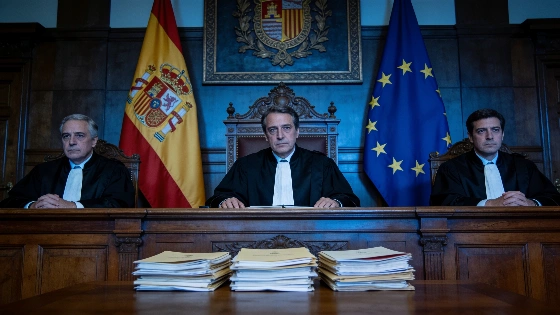
Spain’s Supreme Court has annulled Meritxell Serret’s conviction for disobedience over the 2017 Catalan referendum. The decision follows the new amnesty law and recent EU court backing. Serret is the first ex-minister to benefit.
The Supreme Court has officially annulled the criminal conviction of Meritxell Serret, former Agriculture Minister in the Catalan government that organized the 2017 independence referendum. This move, announced in Madrid, marks the first time a member of the 1-O executive has been cleared under Spain’s new amnesty law, which was recently endorsed by the European Court of Justice.
Serret, affiliated with ERC, had been sentenced to one year of disqualification from public office and fined €12,000 for serious disobedience. The charges stemmed from her role in facilitating the 1-O referendum while serving in Carles Puigdemont’s cabinet, despite repeated Constitutional Court warnings. The Supreme Court’s criminal chamber declared that all acts for which Serret was prosecuted are now covered by the amnesty, extinguishing any criminal liability.
The ruling comes less than two weeks after the European Court of Justice gave strong backing to the Spanish amnesty law, a development that ERC leaders have welcomed. The party highlighted the speed of the Supreme Court’s response following the EU decision. Serret had previously appealed her conviction to the Supreme Court, arguing that her actions should be covered by the new legislation.
According to the original verdict from the High Court of Catalonia (TSJC) in April 2023, Serret was fully aware of five Constitutional Court orders prohibiting the referendum, all of which were personally delivered to her. The court found that she deliberately ignored these orders and took no steps to halt the vote. During her trial, Serret declined to answer questions from the prosecution, instead making a statement in which she admitted not intervening to stop the referendum, citing her personal convictions about Catalonia’s right to self-determination.
After spending three years in Brussels following the unilateral declaration of independence, Serret returned to Spain in 2021 to face the Supreme Court. Her decision came after other former ministers with similar roles—Carles Mundó, Meritxell Borràs, and Santi Vila—were convicted only of disobedience, not embezzlement, and avoided prison sentences. The amnesty law has now cleared the way for Serret’s legal record to be wiped clean, a move that could set a precedent for other officials involved in the 1-O process.
This development follows a broader trend of legal challenges and appeals by Catalan leaders seeking to benefit from the amnesty, as seen in the recent case where Oriol Junqueras and other former officials contested a Tribunal de Cuentas decision, arguing that Spanish courts had failed to apply the EU’s amnesty ruling. Details of that dispute can be found in this report: Catalan leaders’ ongoing legal battle over amnesty implementation.
The Supreme Court’s decision is significant in the context of Spain’s ongoing debate over the legal and political consequences of the 2017 referendum. The amnesty law, passed in 2024, was designed to address the fallout from the independence push and has been the subject of intense national and European scrutiny. The law’s application to Serret may influence pending cases against other Catalan politicians and officials, as well as future relations between Madrid and Barcelona. The case also highlights the evolving role of European legal standards in shaping Spanish judicial outcomes, especially in politically sensitive matters involving regional autonomy and constitutional order.