Telefónica España is creating three independent units and moving its registered office to Ronda de la Comunicación in Madrid. The decision follows the sale of the group's historic Gran Vía 28 building.
Telefónica completed the sale of its historic Gran Vía 28 headquarters on 1 September. The buyer was businessman Tomás Olivo, through his company Galerías Comerciales. The deal was worth less than 200 million euros, according to sources cited by Europa Press.
The sale is part of a wider change in Spain. Telefónica is replacing its previous operating model with three independent business units: B2B España, B2C España and Mayorista España.
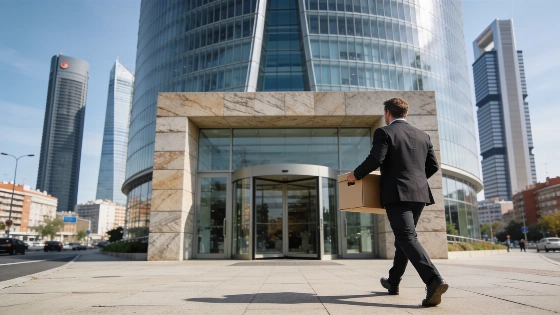
The registered office will move from Gran Vía 28 to Ronda de la Comunicación in Madrid. That address is in the Central Building at the complex formerly known as Distrito C and now called Distrito Telefónica.
The three-unit restructuring was also reported as having been notified to Spain’s securities regulator, the CNMV, alongside the board’s decision to simplify Telefónica España’s structure.
The board approved the new model after a proposal from Telefónica group executive chairman Marc Murtra. Support functions will move into the corporate areas. The Spanish business will then be organised around its three commercial segments.
That is the central decision.
Europa Press and Expansión described the plan as a way to cut duplicated functions and give each unit more autonomy. Telefónica says the structure should sharpen the focus on each market and make every unit more responsible for its results.
The company also expects faster decisions, fewer duplications and stronger growth in the two areas it sees as having the greatest potential: businesses and residential customers.
Borja Ochoa will remain non-executive chairman of Telefónica España and will lead the B2B unit. The other two units will operate independently within the new Spanish framework. The announcement does not name their leaders.
The overhaul extends beyond Telefónica España. According to El País, Telefónica’s board also abolished the board of Movistar Plus+, and Javier de Paz left the platform’s chairmanship as part of the wider governance changes.
The reorganisation also reaches beyond the Spanish business. Telefónica plans to transfer capabilities developed in Spain to other markets. Its stated priorities include cybersecurity, cloud and defence services, along with new B2C businesses.
Spain is being positioned as a base for digital services that Telefónica can develop and scale abroad. The company links that plan to technological autonomy in Europe and to Spain's wider role in the European market.
The strategy puts the Spanish operation beyond domestic sales. Telefónica says the concentration of expertise and the removal of duplicated functions will support that role.
The headquarters change also requires an amendment to article 3.1 of the company's articles of association. The board approved the amendment so the registered office reflects the move to the Central Building.
The property sold by Telefónica includes the renovated Espacio Movistar and Fundación Telefónica. The group will now operate from its own campus at Ronda de la Comunicación.
The relocation sits within a wider pattern of corporate decisions that place operational efficiency alongside pressure on essential services in Spain. An earlier report on nursing capacity illustrates that pressure in a different sector.
Here, the plan is direct. Telefónica wants fewer organisational layers between its Spanish business and the people responsible for each market.
The company is changing more than its organisation chart. It is separating its Spanish activity into accountable businesses and using Spain as a development base for services that can be scaled abroad.
The three-unit model and the headquarters transfer make this a concrete restructuring. Execution speed and responsibility for results now sit at the centre of Telefónica's Spanish strategy.