Valencia's vaccination campaign began on 28 September, while Andalusia's is due to start on 1 October. SATSE says both regions are moving ahead without extra nurses, raising the risk of delays now and pressure on emergency departments later.
Valencia began its flu and COVID-19 vaccination campaign on 28 September. The rollout is taking place in stages. Andalusia is due to start on 1 October.
SATSE says the campaigns are moving ahead without the extra nurses primary care needs. The Sindicato de Enfermería expects delays and incidents in vaccination services. It also warns that pressure could shift to hospital emergency departments when flu, COVID-19 and other respiratory viruses spread.
Primary care teams are already carrying the load.
Health authorities are adding vaccination duties to existing workloads, according to the union. SATSE also criticises the lack of cover for nurses absent because of illness, leave licences or rest days.
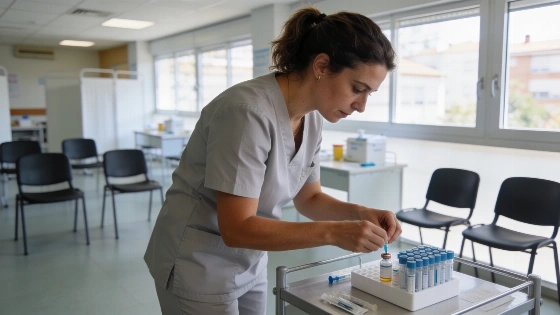
SATSE says nurses’ role in the vaccination campaign goes beyond administering injections: they also plan the programme, manage appointments, receive and store doses, monitor coverage and track possible vaccine reactions.
The warning is not limited to appointment times.
SATSE says the same pattern returns each year. Vaccination work becomes slower and harder to manage before emergency departments see more patients with flu, COVID-19 and other respiratory viruses. The organisation links both stages to the extra burden on nursing staff.
Sessions held in the afternoon, at weekends or outside normal working hours raise a separate issue. SATSE says this work must be voluntary and fairly paid. The union rejects very low rates and unequal payments within the same health service.
It wants regulated voluntary modules. Rest and work-life balance must be protected.
Regional schedules are already set: vaccination began in Valencia on 28 September and is being rolled out in stages, while the campaign in Andalusia is due to start on 1 October. Regional reports say the main complaint is that no specific additional nursing posts have been announced.
The staffing shortage affects other care too. Preventive programmes and health-promotion work in health centres and patients’ homes may be put on hold. Chronic and multimorbid patients may receive less dedicated attention.
SATSE says these interruptions affect programmes with a direct bearing on people's health and quality of life. The union has repeatedly called for stronger nursing teams before the campaigns begin, Servimedia and Europa Press report.
In Andalusia, SATSE has asked the Servicio Andaluz de Salud to cover absences caused by holidays, sickness and leave licences. It also wants extra staff in centres with the highest workloads.
The dispute fits a wider pattern in which public services carry unresolved capacity problems, much as an earlier public-service report showed in another policy area. Here the pressure is operational. Nurses must absorb a seasonal campaign without the staffing arrangements the union considers necessary.
Reports from Valencia and Alicante also describe campaigns starting without specific reinforcement of nursing establishments. That raises the risk that vaccination duties will pass to existing primary-care teams. Regional reports identify the lack of announced additional nursing posts as SATSE's main complaint.
The available reports are dominated by SATSE's position and regional campaign announcements. They do not show an official rebuttal or response from the health authorities.
SATSE says the problem will return in coming years unless health services plan their nursing workforce together and calculate staffing needs properly. The union expects demand to keep growing.
It has promoted an Iniciativa Legislativa Popular seeking enough nurses in hospitals and health centres to guarantee safe and quality care. That proposed law has been pending in the Congreso de los Diputados for more than six years.
SATSE describes the delay as a debt owed by public and legislative authorities to citizens. The union's position is direct: vaccination cannot be treated as an extra task for teams that are already stretched.
The cost then appears elsewhere. Patients face delays, emergency departments face more pressure and preventive care may be suspended. Unless staffing and voluntary out-of-hours work are addressed together, the campaign will keep exposing a planning failure instead of meeting a public-health need.