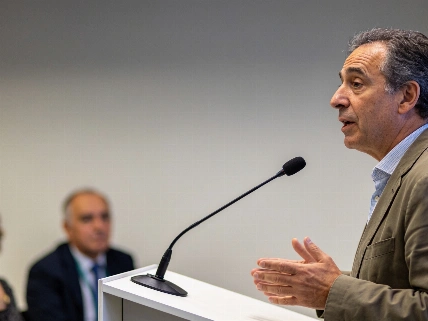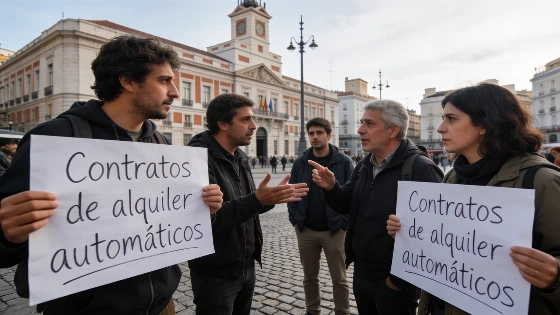
The Sindicato de Inquilinas is challenging the Government over rental contracts. Its 4,000 members want automatic renewals and reject public subsidies.
Founded in Madrid in 2017, the Sindicato de Inquilinas says it has 4,000 members. The group is pressing the Government to include automatic lease renewals in its housing decree and has made that demand a condition of its support for the measure.
The union is ready to step up pressure if Pedro Sánchez's executive leaves automatic extensions out of the package. Its campaign has two fronts: members organise street protests while negotiating over individual homes.
The next test will come after PSOE and Sumar agree on the decree. Alicia del Río, spokesperson for the Sindicato de Inquilinas de Madrid, has warned that contract extensions must stay in the package. A measure that could advance the Government's housing agenda could also backfire if protesters find the final text too weak.
The organisation already has a recognised symbol in the eviction case involving Maricarmen. It also helped lead the camp set up at Puerta del Sol. The union takes part in specific disputes and pushes for housing policy changes, including a legal system for automatic rental renewals. 20minutos has reported that the Sindicato de Inquilinas has maintained its mobilisation at Madrid’s Puerta del Sol until automatic lease renewals are included in the Government’s package. laSexta and Onda Cero have reported the same.
Its Catalan counterpart, the Sindicat de Llogateres, was also created in 2017. The Madrid group describes itself as a tenants' organisation seeking better living conditions and an end to what it calls the business model built around housing.
The union's most visible representatives are Alicia del Río and Valeria Racu. Del Río has links to the 15-M movement. She worked as a secondary-school counsellor and took part in Menos Lectivas, a campaign for better conditions for teachers. Racu became involved in student union activity at university and was elected co-president of her institution's student union.
RTVE and Onda Cero have identified automatic renewal as the central point of dispute. The union’s proposed package includes rent freezes. It would also change the Ley de Arrendamientos Urbanos to cover short-term and room rentals, and introduce measures against evictions without alternative housing.
The Sindicato de Inquilinas says tenants need collective organisation to confront rent increases. It also wants to address forced contract endings and residents being pushed out of their neighbourhoods. Its stated goal is to challenge a system in which property rights carry more weight than the right to a decent home. The group also stresses that it is independent of political parties and public administrations.
Members fund that independence. The ordinary contribution is 100 euros a year or 10 euros a month. People with fewer resources can pay less. The organisation says it receives no subsidies. Membership fees provide 87% of its income, information from its published breakdown. Services such as talks and workshops account for 10.8%, while donations provide 2.2%.
Personnel costs make up 71.8% of spending. Another 10% goes into a resistance fund, which covers fines and collective legal action, as well as other unexpected costs. The model gives the union a clear political identity. It also ties its ability to organise to tenants' contributions and participation.
The dispute is also about the length of any extension. Spanish media reports say Sumar is pressing for a two-year extension for leases expiring before the end of 2028. Sources close to PSOE have reportedly favoured a shorter, one-year period. That gap helps explain why the issue remains unresolved despite a draft agreement between the parties.
The union says it negotiated 80 new contracts with Blackstone in Madrid without abusive increases. It also points to the case opened by the Ministerio de Consumo against Alquiler Seguro over practices it says breached the Ley de Vivienda. The group estimates that up to 22,000 households were affected. It says the case could allow claims over improperly charged fees. Claims could also address abusive clauses and breaches of the right of withdrawal.
In Madrid, the Sindicato de Inquilinas highlights the suspension of two evictions at Argumosa 11. It also cites the recovery of 25,000 euros for illegal increases affecting residents in three buildings. In Vallecas, negotiations allowed 100 households to sign new contracts without increases. The wider housing dispute was already playing out in Madrid's political arena.