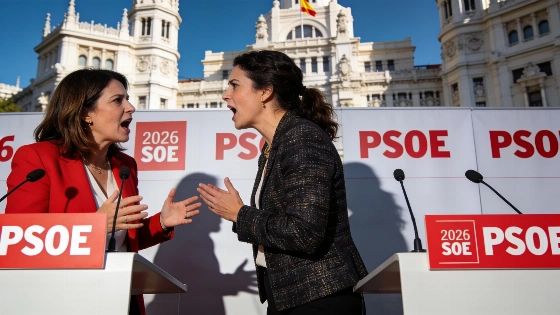
Madrid's PSOE faces internal conflict as Reyes Maroto accuses Enma López of disloyalty. The dispute centers on the party's mayoral candidacy for 2027. Both candidates seek to challenge Almeida, but divisions have surfaced.
Madrid's Socialist Party (PSOE) is facing an unexpected internal rift as the contest for the party's 2027 mayoral candidacy intensifies. Reyes Maroto, current leader of the PSOE in Madrid and former Minister of Industry, has openly criticized her colleague Enma López for what she describes as a lack of loyalty and for abandoning the party's collective project. The dispute erupted after López, previously Maroto's campaign director and the party's number two in the city council, announced her own candidacy three weeks ago, catching the regional executive off guard.
Maroto, who had been widely expected to run unopposed for the PSOE's nomination to challenge José Luis Martínez-Almeida (PP) in the next municipal elections, now faces a direct challenge from within her own ranks. According to Maroto, López's decision to launch her campaign was not only premature but also disregarded established party procedures and overshadowed a critical week for the national leadership, as President Pedro Sánchez was addressing the federal executive.
In a series of statements, Maroto emphasized her commitment to the party's long-term strategy for Madrid, highlighting her efforts to build support among grassroots members and local communities since 2023. She pointed to her collection of over 1,400 endorsements as evidence of her backing within the party. While acknowledging that López also inspires enthusiasm among some members, Maroto insisted that her rival must explain why she broke away from the shared project and acted independently.
The conflict has brought to light deeper questions about party unity and the direction of the PSOE in Madrid. Maroto rejected labels suggesting she is the candidate of the party establishment, arguing that her support comes from the base and that the primary process itself is a sign of healthy internal democracy. She also dismissed suggestions that her tone toward López had hardened, maintaining that she has always approached the situation with respect and normality, despite being surprised by López's move.
Maroto further criticized what she sees as an individualistic approach from López, reiterating her own focus on collective goals and party discipline. She drew a distinction between the current situation and the 2017 national PSOE primaries, noting that, unlike Pedro Sánchez at the time, López has not stepped down from her official roles within the party. Maroto called for unity, stressing that the real political opponent remains the PP administration in Madrid.
Both candidates have agreed to a debate to present their visions for the city. Maroto outlined her priorities, including a comprehensive housing policy to control rental prices, the construction of public housing on municipal land, and a thorough review of city cleaning contracts. She argued that her approach is rooted in defending public services and rights, contrasting it with what she described as the PP's focus on business interests.
Addressing her own political trajectory, Maroto dismissed concerns about her relative newcomer status in the city council, pointing to her long-standing involvement in Madrid's political life and her previous ministerial experience. She expressed confidence that, regardless of the primary's outcome, she would support the winning project and remain committed to the party's goals.
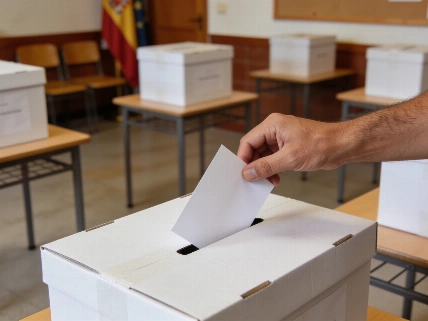
The outcome of Sunday's primary vote will determine who leads the PSOE's challenge against Almeida in 2027. Both Maroto and López have indicated a willingness to work together after the contest, though the recent public disagreements highlight the challenges facing the party as it seeks to present a united front. The primary process itself is seen as a test of internal democracy within the PSOE, with party leaders emphasizing its importance in strengthening the organization ahead of future elections.
Madrid's political landscape has seen frequent changes in party leadership in recent years, a pattern Maroto identified as a weakness for the PSOE. The current contest is being closely watched as an indicator of the party's ability to maintain cohesion and build a credible alternative to the PP's long-standing control of the city. The result may also influence broader strategies for the PSOE at both regional and national levels, especially as other major cities, such as Valencia, have adopted similar approaches by fielding high-profile candidates with ministerial backgrounds.
For context, the PSOE has struggled to regain control of Madrid's city government in recent decades, with the PP maintaining a stronghold. The outcome of the current primary could shape the party's prospects in the capital and signal its readiness to challenge the status quo. As the vote approaches, attention remains focused on whether the PSOE can overcome internal divisions and present a compelling vision for Madrid's future.