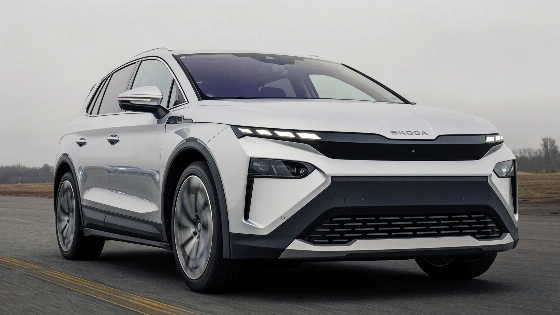
Electric cars are no longer a luxury in Europe. We compare the Skoda Elroq, Tesla Model 3 and Kia EV4—three standout models under €45,000—on range, comfort and everyday usability, based on real-world tests.
Choosing an electric car under €45,000 in Europe now means navigating a crowded field of contenders, each promising a blend of range, practicality and value. Recent tests by AUTO BILD Germany have put several of these models through their paces, focusing on real-world performance, comfort and efficiency. Here’s how the top three stack up for drivers seeking a smart, future-proof choice.
Skoda Elroq: Balanced Everyday Champion
The Skoda Elroq leads the pack, standing out for its well-rounded approach to daily driving. This compact electric SUV offers a practical 77 kWh battery, a spacious interior and a ride tuned for comfort. While its official range is competitive, real-world testing in cold conditions revealed a consumption of 28.5 kWh/100 km and a usable range of 323 km—numbers that may not impress on paper, but reflect the challenges of winter driving. The Elroq’s strengths lie in its roomy cabin, refined propulsion system and advanced driver assistance features, making it a compelling option for families and commuters alike.
Tesla Model 3: Value Meets Performance
In second place, the Tesla Model 3 sedan delivers strong efficiency and rapid charging, paired with a price that undercuts many rivals. Its 4.72-meter length gives it a substantial presence, but the interior is more minimalist than plush. The Model 3’s signature touchscreen interface divides opinion, and some drivers may find the seats less supportive than expected. Despite these quirks, the Tesla impresses with its charging speed and overall value, though it offers less space and comfort than the Skoda Elroq.
Kia EV4: Korean Versatility
The Kia EV4, measuring 4.45 meters long and 1.86 meters wide, brings a fresh take to the mid-size segment. Powered by a 204 hp electric motor and a generous 81.4 kWh battery, it accelerates from 0 to 100 km/h in 7.9 seconds. The EV4’s suspension is notably refined, and steering improvements are evident, though some may find the feel inconsistent around the center. Unlike its larger sibling, the EV6, the EV4 uses a 400-volt architecture, resulting in a 30-minute charge time from 10% to 80%. Inside, recycled materials create a modern, tactile environment, but some controls—like the heated steering wheel—are awkwardly placed. The EV4 scores with its airy cabin, strong brakes and generous warranty, though rear seat comfort could be better.
How the Testing Works
Each vehicle underwent a rigorous evaluation, combining measured data—such as range, standardized consumption over 155 km, charging performance and braking distances—with subjective impressions from daily use. Cabin space, noise levels and overall usability were also assessed, ensuring a comprehensive comparison across the segment.
For those interested in how other electric crossovers stack up, a recent comparison of the Skoda Epiq and Renault 4 E-Tech explores their strengths for city drivers in detail: see how these urban EVs compete on space, range and value.
Context and Takeaways
Europe’s electric car market has rapidly matured, with nearly one in five new cars now fully electric. Models like the Skoda Elroq, Tesla Model 3 and Kia EV4 show that buyers no longer have to compromise on practicality or comfort to go electric. However, real-world range can vary significantly with weather and driving style, and features like fast charging or advanced driver aids often require careful attention to trim levels and options. As competition intensifies, the gap between premium and mainstream EVs continues to narrow, giving consumers more choice than ever before.