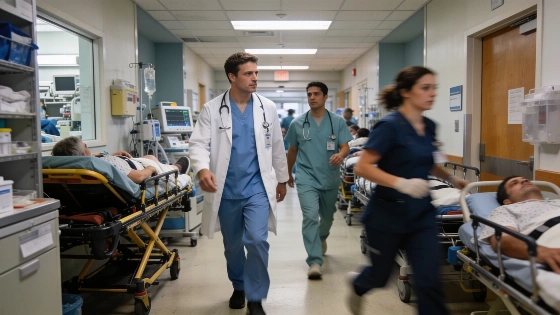
The Pitt’s sweep at the 2026 Emmy Awards drew a strong reaction from emergency doctors. The hospital drama is being recognized by people who know that world firsthand, seeing a close reflection of their daily work rather than fantasy. Its depiction of pressure in crowded wards, alongside ethical dilemmas, has resonated with professionals who rarely see their reality on screen.
Set in Pittsburgh’s Trauma Medical Center, The Pitt is structured to match the relentless pace of the ER. Each episode covers a single hour, with no letup in the chaos or exhaustion. Michael Robinavitch, called Robby and played by Noah Wyle, leads the cast. Wyle, who is also an executive producer and script contributor, draws on his experience from ER and works closely with doctors on the writing team. That collaboration keeps medical details basic to the story. Reuters reported that The Pitt led the 2026 Emmy nominations with 25 nods, the highest for any series that year.
Doctors have responded with unusual enthusiasm. Tony Cirillo, president of the American College of Emergency Physicians, called the show a long-overdue acknowledgment. At a major emergency medicine conference, Wyle was met with thanks instead of the usual celebrity attention, as thousands of practitioners expressed gratitude for bringing their struggles to television. For many, The Pitt feels like validation as well as entertainment.
The series takes on the darker side of healthcare, showing desperate relatives leaving patients and families facing impossible choices against a backdrop of financial barriers that shape the American system. Its realism extends to long waits and frustrated patients. Hospitals also face a constant fight for space and resources, problems that aren’t limited to the U.S.
Medical professionals in the UK and elsewhere have echoed these reactions. Fiona Hunter, vice president of the Royal College of Emergency Medicine in Scotland, says she avoids the show right after a shift but finds it compelling when she has time. Rob Perry, another UK doctor, finds comfort in seeing familiar pressures on screen, even if the setting is American. The Pitt compresses multiple trauma cases into each episode, capturing the intensity of real emergency work. KPBS reported that American emergency physicians have praised the show’s realistic depiction, citing its use of real cases and its more honest portrayal of emergency medicine than most hospital dramas.
Behind the scenes, the show’s commitment to accuracy is strict. Gerran Howell, nominated for Best Supporting Actor, underwent intensive medical training with the rest of the cast, learning procedures and terminology to avoid the usual shortcuts. Medical advisor Sarah Tosh, a senior NHS nurse, keeps teamwork and patient care at the center of every episode. She notes that while the characters’ personal lives are present, the medicine always comes first.
Professor Damian Roland, an emergency medicine specialist, sees The Pitt as a window into global healthcare problems. The show’s recurring battles for space and resources mirror shortages faced by hospitals everywhere. Roland says the series dramatizes the universal struggle for adequate facilities, a theme familiar to anyone in public health. Its stories echo real headlines, including recent reports about Madrid hospitals facing similar pressures.
The Pitt’s impact goes beyond ratings or awards. Its Emmy success marks a shift in what viewers and professionals expect from medical dramas: audiences are asking for stories that show the real cost of healthcare work. The show is available on HBO Max, and its influence may lie in how it pushes both the industry and the public to face what happens behind hospital doors. In a field crowded with formulaic series, The Pitt stands out for its commitment to truth, with recognition from doctors showing television can do more than entertain.