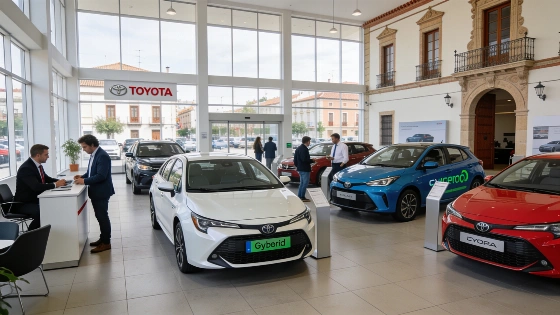
Toyota España posted record sales and revenue in its latest fiscal year, but a sharp rise in taxes led to an 8.4% drop in profit. The company remains committed to hybrid and electric models as it navigates a changing market.
Toyota España ended its 2026 fiscal year with a striking contradiction: the company achieved all-time highs in both sales and revenue, yet saw its net profit fall by 8.4% to €19.3 million. The reason was clear—a near doubling of its tax bill, which reached €15.9 million, up 98% from the previous year, according to figures submitted to the Spanish Mercantile Registry and reported by elespanol motor.
Operating profit actually rose 2.7% year-on-year to €47.5 million, driven by robust demand. Total revenue climbed 8% to €3.32 billion, with more than 128,000 vehicles sold—an increase of 11% or 12,000 units over the prior period. The Canary Islands division contributed over 6,000 vehicles, up by 300 units. Vehicle sales revenue grew 7.3% to €2.94 billion, while parts sales jumped 13.7% to €333.5 million.
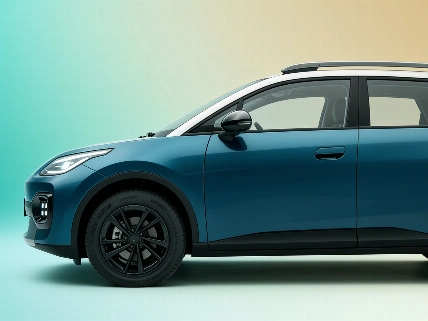
Among Toyota models, the C-HR family (C-SUV segment) led the way with over 23,000 units sold, including more than 9,000 plug-in hybrids—a new addition to the lineup. The Corolla (C segment) followed closely with over 22,000 units, and the Yaris Cross (B-SUV) exceeded 20,500 units.
Lexus, Toyota’s premium brand, maintained steady performance with over 9,300 units sold, nearly all of them hybrids or plug-in hybrids. The NX (D-SUV) was the top seller, surpassing 3,300 units, including around 800 plug-in hybrids. The LBX (B-SUV) and UX (C segment) followed with more than 3,100 and 1,800 units, respectively. The all-electric RZ rounded out the multitechnology offering.
Despite stable headcount at 167 employees, personnel costs rose sharply by 20.8% to €19.3 million. This was largely due to a 30.1% increase in salaries, reaching €14 million, and a fourfold jump in severance payments to €653,000.
Looking ahead, Toyota España plans to double down on its multitechnology strategy, with hybrid technology—both self-charging and plug-in—at the core. The company expects to gradually expand its 100% electric lineup, as seen with the bZ4X and the latest C-HR+, while keeping hydrogen fuel cell vehicles as a niche offering. Notably, global sales of Toyota’s hydrogen models fell 56.7% in the first half of the year, totaling just 306 units.
The Spanish market’s appetite for electrified vehicles is also reflected in the success of other brands. For example, the Kia EV3 has quickly become a standout in the electric SUV segment, highlighting the growing competition and consumer interest in advanced EVs. More details on this trend can be found in this report on the rise of the Kia EV3.
As Toyota navigates higher taxation and rising costs, its commitment to hybrid and electric innovation remains central to its strategy in Spain’s evolving automotive landscape.