The Strait of Hormuz has become a focus of competing U.S. and Iranian efforts to influence commercial shipping during the 2026 conflict. On October 23, Reuters reported that President Donald Trump said the war could end quickly and that “oil is getting out through the Strait of Hormuz.” He also asked, “Do we want to finish it off or just want to let it wither?” His remarks concerned the course of the conflict and ongoing oil movements through the waterway.
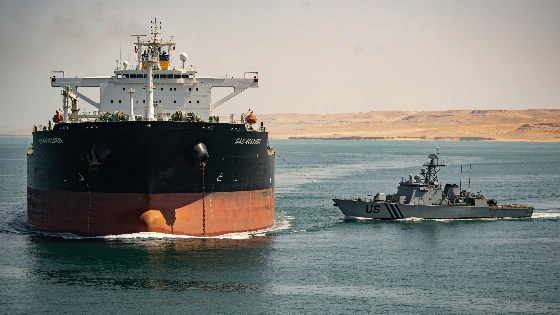
The United States and Iran have promoted different routes for vessels navigating the strait, which lies between Iran and Oman. Iranian authorities have sought to direct ships along a northern route near Iran, while the Trump administration has encouraged traffic along a southern route near Oman. CBS News reported Iranian claims that “non-compliant” vessels had been halted and that renewed U.S. escorts or ship-to-ship transfers could prompt a “much more forceful” response. These competing route demands and naval operations describe an operational contest, distinct from territorial sovereignty.
The strait’s importance reflects the volume of energy moving through a narrow corridor with limited alternatives. The U.S. Energy Information Administration’s prewar benchmark was about 20.9 million barrels of oil per day, roughly one-fifth of global petroleum consumption, along with approximately 11.4 billion cubic feet of liquefied natural gas per day. Bypass pipelines offer an estimated 4.7 million barrels per day of capacity, substantially less than normal Hormuz oil flows. Reuters reported that Gulf producers were turning to alternative pipelines and that U.S. naval cooperation was helping some tankers transit near Oman.
Shipping and flow estimates point to serious disruption, but also to continued exports through the strait and alternative routes. Data cited by the International Energy Agency put September flows through Hormuz at 10.9 million barrels per day, with another 5.6 million barrels per day moving through bypass routes. Separately, reported vessel counts for the week ending October 14 included 125 outbound and 129 inbound transits, about 70% below pre-conflict levels. Kpler data cited by Fortune indicated that shipments across Hormuz and alternative routes together averaged more than 24 million barrels per day in the week before October 23.
Those figures help explain why risk to shipping in the Gulf can affect global energy markets: rerouting and pipelines can preserve some supply, but their capacity and operation do not eliminate the importance of safe passage through the strait. For Spain and other energy-importing European countries, changes in export volumes and shipping risks, along with oil prices, remain consequential. The situation combines continued energy flows with reduced and more hazardous maritime traffic, while Washington and Tehran contest how vessels should handle the corridor.