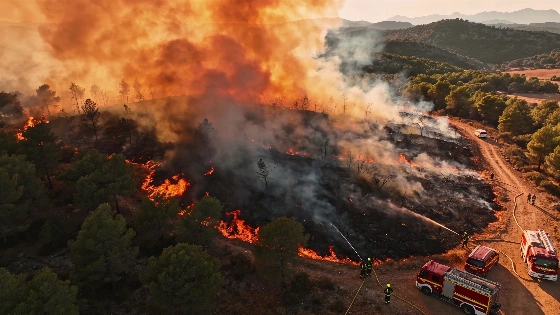
At least twelve people had died and 23 were reported missing after a fast-moving wildfire broke out near Los Gallardos in Almería on Friday, 9 July 2026. Emergency services responded as flames swept through steep, rugged terrain dotted with isolated houses, many owned or occupied by foreign residents. The initial death toll later rose: subsequent coverage reported 13 deaths, while other accounts put it at 14 or 15 as hospitalized victims died and authorities continued identification procedures. Later reporting described the fire as Andalusia’s deadliest wildfire by number of fatalities.
Initial investigations indicated that the fire may have started when an electrical cable fell in the Almocaizar area, close to the N-340a road. The blaze then advanced rapidly north and northeast, threatening the municipality of Bédar. Difficult terrain and scattered housing complicated evacuation and firefighting efforts. A later local estimate put the affected area at approximately 7,000 hectares.
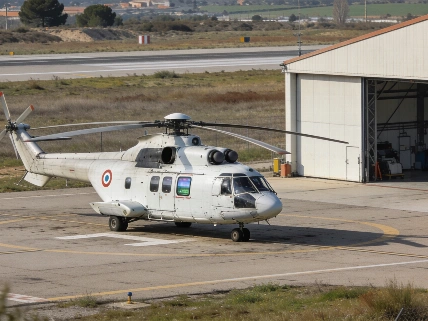
Local authorities and the Guardia Civil focused on finding the missing and supporting affected residents. Search teams continued checking burned areas. Later searches found no additional fatal victims, while the reported number of missing people shifted during the response. Steep slopes and limited access routes made rescue and containment especially demanding. Many homes in the affected zone are isolated, putting people who cannot evacuate quickly at greater risk.
The tragedy in Almería echoes previous deadly wildfires in Spain and renews concerns about fire safety in rural and mountainous regions. For a broader perspective on how Los Gallardos now ranks among Spain’s most tragic wildfire sites, see the analysis of past incidents in this recent report.
The fire came during an exceptionally severe season across Spain. The European Commission’s European Forest Fire Information System, Copernicus EFFIS, recorded 301,413 hectares burned nationally between 1 January and 21 October 2026, equal to 43% of the European Union total. By 5 July, Spain had already recorded 50,750 hectares burned, more than twice the area recorded by the same date in 2025. In Andalusia, provisional season figures cited by regional reporting put the affected area at 58,735 hectares. Woodland accounted for 28,023 hectares, scrubland for 17,507 hectares and grassland for 13,205 hectares. Six fires exceeded 500 hectares. Los Gallardos was among three incidents that reached operational level 2; authorities evacuated, relocated or confined 6,444 people during the season’s emergencies.
Andalusian fire-season reporting attributed more than 94% of fires to human causes, a regional statistic that does not establish the cause of the Los Gallardos blaze. The cable remains part of the initial investigation. The incident also prompted nearby municipalities to revisit emergency planning: Garrucha began preparing a plan for future catastrophes, with prevention and coordinated response among the issues raised. The figures show the pressure on fire prevention and emergency response across the region, where the burned area in 2026 was reported at more than seven times the annual average.
Wildfires recur in southern Spain, particularly during the dry summer months, when high temperatures and strong winds can turn small sparks into major disasters. Natural vegetation and scattered rural housing can make access difficult for residents and responders. The Almería disaster has renewed calls for continued investment in prevention and rapid-response capacity, alongside public awareness efforts, especially in areas with steep terrain and isolated homes.