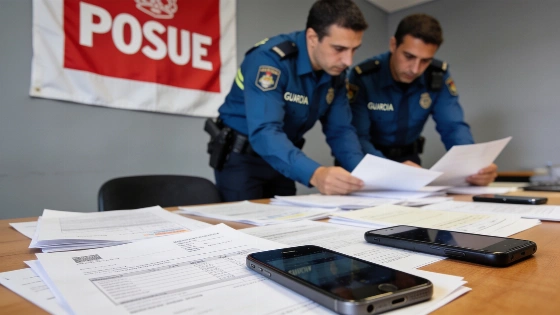
The Guardia Civil’s Central Operative Unit (UCO) has told the National Court it cannot establish where funds allegedly used by PSOE for covert operations came from. In a report to Judge Santiago Pedraz of Basic Court of Instruction No. 5, investigators say their review of the party’s bank accounts has not identified the source or final destination of basic transactions. The UCO is seeking judicial authorization to examine more of PSOE’s financial products. Its current access covers six accounts, though the party holds more.
The inquiry covers €43,225 allegedly routed through intermediary companies before reaching former socialist activist Leire Díez. The companies reportedly also invoiced PSOE, including entities linked to former Andalusian vice president Gaspar Zarrías and lawyer Ismael Oliver. Onda Cero reported that one channel involved €27,000 paid to Díez by a company associated with Oliver, after the same amount had reportedly been invoiced to the party for legal advice. In another reported sequence, a consultancy linked to Zarrías received four PSOE invoices of €4,000 each, then made four transfers of the same amounts to Díez. Investigators are examining whether the matching payments and their timing suggest intermediary firms were used to conceal the transfers’ purpose.
The UCO says the records PSOE provided do not establish where the money came from or how it was ultimately used. The transactions do not appear in the bank statements submitted by the party. Investigators have not determined whether the invoices were paid from the disclosed accounts or whether funds moved between accounts held by the same individuals or entities. They say broader access is needed to trace the full flow of money and identify other potentially relevant transactions. The court has requested contracts and supporting records for lawyers, law firms and consultancies hired by PSOE between 2021 and 2025.
On 20 October 2026, Judge Pedraz gave PSOE 48 hours to provide a complete list of those professional firms and related documentation, following an earlier request. The party reportedly sought more time, citing professional secrecy and confidentiality, and missed the initial deadline. It has described the contracts as covering ordinary legal services. The order is a procedural step in an ongoing investigation, not a finding of criminal liability.
One transaction cited in the UCO report is a payment of €18,125 to journalist Patricia López. Investigators found that PSOE first sent the sum to Barcelona-based Iki Group Communications, a regular contractor for the party. The company then transferred the full amount to Crónica Libre, the media outlet López managed in 2024. A publication staff member confirmed the transaction in court. The payment is also absent from the Ferraz accounts investigators reviewed.
The inquiry also covers payments involving lawyer Jacobo Teijelo, who later represented Santos Cerdán. El Debate reported that investigators were examining at least €125,000 paid through invoices they considered potentially false or instrumental. Infobae separately reported that €53,000 paid to Teijelo’s law firm did not appear in documentation supplied by PSOE. The figures put records for legal services and consultancy work at the center of the court’s next evidentiary steps.
The investigation concerns alleged efforts to obtain compromising information about judges and other officials involved in law enforcement or investigations. Díez has rejected the UCO’s account, calling its report full of false assertions and arguing that a separate Policía Nacional report undermines its conclusions. The allegations and investigative findings remain under examination in court. For more on judicial investigations tied to PSOE, see this related report on courtroom tensions during García’s sentencing.
The UCO’s request for wider access is intended to help investigators reconstruct the flow of funds through the party’s accounts and related financial records. The court’s review of contracts and payment records will establish what evidence is available to assess whether the services were performed and whether the transactions were recorded as ordinary professional expenses.