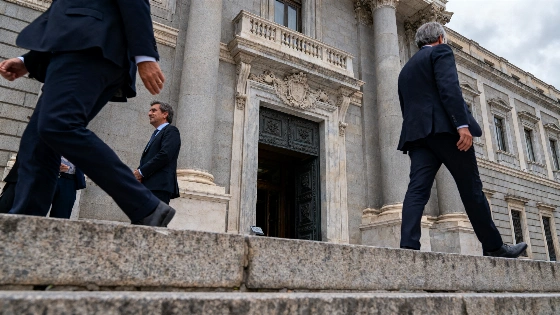
Leticia de la Hoz, lawyer for Koldo García, was visibly shaken after her client received a 19-year prison sentence. She now faces her own charges in the PSOE 'cloacas' case. The courtroom moment exposed deepening legal and political rifts.
The sentencing of Koldo García Izaguirre to 19 years in prison for his role in the so-called Mascarillas case triggered a dramatic scene at Spain's Supreme Court. Leticia de la Hoz, García's lawyer, was overcome with emotion as she received the court's decision on June 22, according to witnesses present. The verdict not only sealed her client's fate but also intensified scrutiny on De la Hoz herself, who is now formally charged in a related investigation into alleged judicial obstruction tied to the PSOE's internal affairs.
De la Hoz is due to appear before Judge Santiago Pedraz on July 14, facing accusations of pressuring businesswoman Carmen Pano to retract claims that she delivered €90,000 in cash at the PSOE headquarters in exchange for a hydrocarbons license. Investigators allege De la Hoz offered Pano up to €250,000 to change her testimony, a move prosecutors say was part of a broader effort to derail judicial probes affecting the government of Pedro Sánchez. The evidence against De la Hoz, as outlined in the case file, is described as substantial and implicates other figures linked to the so-called 'cloacas' network.
The tension in the Supreme Court was heightened by a direct exchange between De la Hoz and Alberto Durán, the Partido Popular's legal representative in the Koldo case. De la Hoz, visibly distressed, pressed Durán on whether he intended to question her about the alleged €250,000 offer during her upcoming testimony and whether he would seek precautionary measures against her. Durán's evasive response prompted De la Hoz to hint at revealing potentially damaging information about the PP in the National Court, a remark that observers interpreted as a veiled threat to involve the opposition in the ongoing scandal.
Throughout the trial, De la Hoz had already drawn attention for her unconventional legal tactics and confrontations with both the court and the Anti-Corruption Prosecutor's Office. Some of her questioning reportedly reinforced the case against García rather than undermining it. She, along with figures like José Luis Ábalos and others in the PSOE, has argued that the Mascarillas case is politically motivated, aimed at destabilizing the Sánchez government. The latest courtroom confrontation marks a new escalation in this narrative.
Sources close to De la Hoz confirmed the events to El Confidencial but downplayed their significance, stating that her main concern was understanding the PP's strategy for her own hearing. However, the official investigation points to her central role in attempts to neutralize Pano's testimony. Judge Pedraz's order from May 27 places De la Hoz at the heart of the alleged operation, with evidence suggesting that other lawyers, including Ismael Oliver, coordinated efforts to persuade Pano to alter her account. The sum offered reportedly increased from €50,000 to €250,000, with the goal of clearing both Ábalos and García of wrongdoing.
On June 3, De la Hoz approached the Guardia Civil's Central Operative Unit, seeking to present evidence she claimed would prove her innocence and implicate Pano in soliciting a €10,000 commission for an illegal fuel operator. While some media outlets reported on her claims, the Central Court of Instruction No. 5 did not find them sufficient to halt proceedings. Judge Pedraz formally summoned De la Hoz as a defendant on June 8, citing her alleged involvement in efforts to obstruct justice in cases affecting the government and Sánchez's inner circle.
The legal and political fallout from the Mascarillas case continues to ripple through Spain's institutions. The case has drawn comparisons to other high-profile scandals involving public officials and judicial investigations. For instance, the recent controversy surrounding María Jesús Montero and Vicente Fernández, as detailed in this report on the SEPI and Leire case, highlights the persistent challenges of oversight and accountability within Spanish politics.
Spain's judicial system has faced mounting pressure to address allegations of corruption and political interference. The Mascarillas case, with its complex web of accusations, legal maneuvers, and public confrontations, underscores the difficulties in untangling political interests from judicial processes. As De la Hoz prepares for her own court appearance, the outcome may have broader implications for ongoing investigations and the credibility of Spain's legal institutions. The coming weeks are likely to see further developments as the courts continue to examine the actions of those at the center of these high-stakes cases.