How Homo Zapping Changed Spanish Comedy and Became a Cult Show. Homo Zapping was a breakthrough for Spanish television. Creative freedom, an unconventional approach to parodies, and iconic characters made the show unique. One of its most memorable characters appeared by chance.
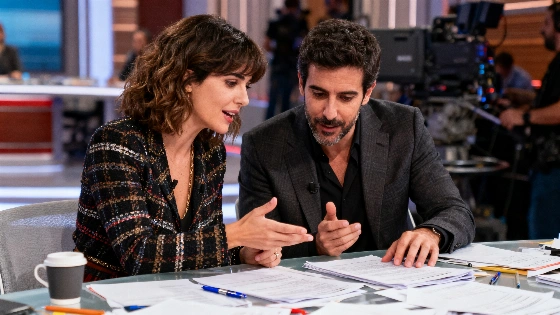
In Spain, the television show Homo Zapping became a real phenomenon, changing the approach to parody and humor on national television. The program stood out not only for its creative freedom but also for its unique system of assigning roles among actors. According to the show's director, the actors themselves chose whom they would portray by writing down their ideas in a regular notebook. This approach allowed the program to react quickly to current events and create unexpected characters, which was one of the reasons behind the show's popularity.
A special place in the history of Homo Zapping belongs to the character Raquel Revuelta, brought to life by Paco León. Her appearance was the result of improvisation and the actor's personal initiative, as he insisted on playing this role despite his colleagues' doubts. León already had experience creating a similar character in the theater, which allowed him to quickly adapt the behavior, accent, and expressions to fit the television format. As a result, the parody took on a life of its own and became one of the most recognizable in the history of Spanish television.
Interestingly, Raquel Revuelta herself did not recognize herself in the character and took the parody with humor. According to her, this might have been due to a subconscious desire to distance herself from the exaggerated traits used by the actor. A technical detail also played an important role: because of poor eyesight, Paco León often could not read the text on the teleprompter and was forced to improvise, which only enhanced the comic effect and added spontaneity to the scenes.
The freedom enjoyed by the actors of Homo Zapping allowed them to go beyond obvious characters. The team sought inspiration even in little-known TV formats, such as Estrenos de cartelera—a short announcement of film programs that was itself unclear even to the show's participants. It was from these unexpected sources that the most vivid and memorable parodies were born, which remain in viewers’ minds years later.
Homo Zapping's approach to creating comedic characters differed from classic impersonations: the actors did not aim for exact copies but instead seized on distinctive traits and exaggerated them to absurdity, inventing new comic personas. This technique became a hallmark of the show and influenced the development of the parody genre in Spain. It is worth noting that such creative freedom is rarely seen on television, where strict scripts and limitations usually prevail.
For context, it's worth recalling that Spanish television has repeatedly served as a platform for experiments and unexpected solutions. For example, recently in Catalonia, the police uncovered an illegal farm with hundreds of sheep and signs of mass slaughter—details of this case can be found in the coverage of the operation to seize animals in Barcelona. Such stories illustrate how varied and unpredictable the Spanish media agenda can be.
For reference: Homo Zapping aired in the early 2000s and quickly became a cult hit thanks to its blend of topical humor, bold parodies, and unconventional approach to character creation. Many cast members later became well-known comedians and actors, and some characters are still referenced in Spanish pop culture. The show is regarded as one of the most influential in the history of national television, and its methods continue to attract interest from industry professionals.