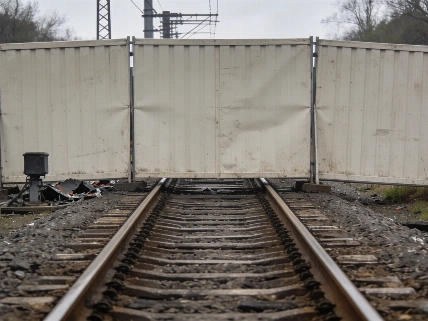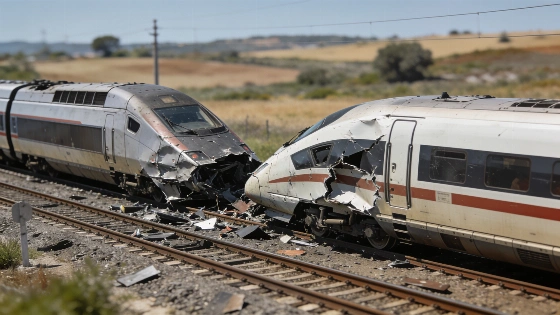
At 8:48, the Iryo told Adif’s control centre it could not restart. No action followed, information from Transport Minister Óscar Puente. Five minutes later, an AVE struck the stationary train after travelling 25 kilometres at more than 160 km/h. At least 69 people died and nearly 200 were injured in the collision near Urda, Toledo, on the Madrid-Seville high-speed line on 28 October 2026.
The sequence began at 8:31, when the LZB signalling system failed. The failure reportedly interrupted transmission across a 63-kilometre section of the line, and several trains were stopped automatically. Adif authorised the AVE to resume at 8:36, at a speed Puente said was far above the legal limit. At 8:41, the Iryo was also cleared to move, but remained stopped at the Urda signal for reasons the minister said were unknown. A preliminary report cited by the BBC put the AVE’s impact speed between 160 and 200 km/h.
Puente said the control centre at Atocha failed to follow its safety procedure. When two trains occupy the same block section, he explained, the train behind should remain stopped. Once the first train moves, the second may proceed at sight at no more than 40 km/h until the next signal. The minister said the workers instead made decisions to restart traffic while both trains were stopped. He described the control-centre decision as erroneous and inexplicable.
After the LZB failure, drivers resumed at normal speed rather than proceeding at sight, according to Puente. One driver followed the restricted-speed procedure after correcting an instruction from Atocha. Puente said the driver’s experience in similar situations may have helped, while responsibility for the instruction lay with the control centre. The degraded-signalling procedure required the train to travel cautiously at a maximum of 40 km/h until the next signal.
It remains unclear who authorised the trains to move, or whether a specific instruction was given. The Civil Guard has questioned the Adif controller who authorised the Renfe train to proceed. Puente said the Autoridad Independiente para la Investigación Técnica de Accidentes e Incidentes (AITAT) and a judge must establish what happened. He also said there had been time to prevent the impact. AITAT has described the events as a sequence of malfunctions, instructions and actions occurring “in the absence of the necessary mitigating barriers.”
A third train carrying 300 people stopped less than 500 metres from the crash site. Puente said he had no evidence that it faced a collision risk on the track towards Madrid. Six trains were stopped; one travelling in the opposite direction corrected Atocha’s instructions. The minister could not say how many trains had been at risk overall. According to the preliminary account cited by the BBC, the Renfe train’s front carriage became embedded in the rear of the Iryo train, while two coaches derailed and fell down an embankment.
The government’s backing of Puente and political demands for accountability after the collision were covered in an earlier account. In his explanations of the incident, Puente said the control centre had 16 controllers and rejected claims that staff lacked tools to monitor trains when automatic signalling failed.
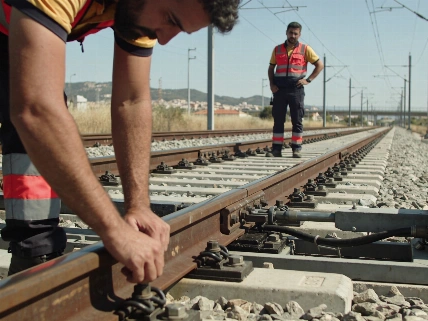
Puente described LZB transmission faults as recurring incidents, citing 150 to 200 a year over the previous six or seven years. He said the Urda section was not unusually problematic and that replacing LZB with ERTMS was driven by European interoperability rather than reliability concerns. Physical installation of the new system on the Madrid-Seville line had finished in June, but its entry into service was expected in early 2027, pending tests and approvals. The line was operating with lateral signals and ASFA protection, with a 200 km/h speed limit.
The crash has also prompted the ministry to review how it carries out high-speed rail upgrades. Spain has prioritised keeping services running, even when that extends construction schedules; Puente said temporary closures were being considered to accelerate work, following the German model. He named the Madrid-Calatayud section for review and said the approach would also be reconsidered for Madrid-Barcelona, where works were due to begin in early 2027.
The collision was the second deadly accident involving Renfe and Iryo on the same line in 2026. The Australian Associated Press reported that a January accident killed 46 people. Prime Minister Pedro Sánchez visited Urda and pledged a full investigation involving the transport-investigation authority and judicial authorities. AITAT’s technical inquiry and the judge’s investigation remained active in reporting published on 30-31 October, with investigators transferring the trains’ event recorders to the Civil Guard for analysis. Puente rejected calls to resign and said he had nothing to hide. No final legal responsibility had been assigned.