Valencian premier agrees to financing talks but demands regional consultation. Valencian authorities are willing to discuss a new financing mechanism, but only in a council involving other regions. Madrid is allocating €4 billion, while debate over the details and guarantees continues amid debt concerns and demands for transparency.
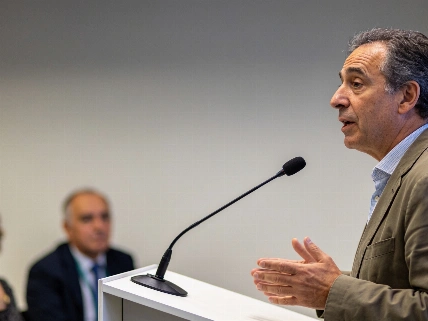
Valencian Community President Juanfran Pérez Llorca (PP) is ready to discuss Madrid’s proposed financing reform, but only at a general council attended by all autonomous communities. He has rejected narrower talks and separate meetings with the central government, arguing that any decision must be enshrined in law and reflected in the national budget. His demand for a collective forum reflects the role of the Council for Fiscal and Financial Policy (CPFF), where Spain’s basic and regional governments coordinate fiscal matters.
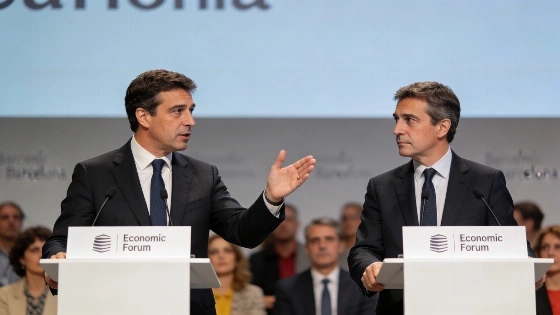
After meeting Pérez Llorca in Valencia, Spain’s Finance Minister Arcadi España (PSOE) called this position an “excuse” and urged regional authorities not to delay negotiations. He said the new scheme could bring Valencia an additional €3.7 billion a year, more than the region requested from Madrid last December. Pérez Llorca said the figures would not become reality until they were legally secured and pointed out that Valencia remains one of the country’s most underfunded regions. The reform is intended to replace or revise the existing autonomous-community funding system, whose allocation formula has long been contested.
The meeting also covered current financial issues. Madrid announced it would allocate €4 billion to Valencia through the FLA mechanism: almost €2 billion via the emergency line and another €2.1 billion under the regular scheme for the third quarter. Both officials acknowledged the importance of the funds, but Pérez Llorca stressed that they are not a gift: the region is legally entitled to the money. He also recalled Madrid’s debts to Valencia in other areas, including funding for the dependency system and medical assistance for newcomers. Separately, the Consell has approved an initial €23.5 million emergency package for communities affected by the DANA Adam storm.
España says the new mechanism should be implemented as early as 2027 and has urged regional authorities not to block the reform over party disagreements. He said talks would start at the technical level before going to the CPFF. After government approval, the proposal would go to parliament. The proposal was reported as approved at the CPFF despite opposition from PP-governed autonomous communities, but that agreement is not itself a change to the law or a parliamentary appropriation. As Javier Jorrín reported in El Confidencial on October 22, the reform had not reached the Council of Ministers or Congress as an amendment to the Organic Law on the Financing of the Autonomous Communities (LOFCA). The report said the announced November 29 election and dissolution of parliament had left the legislative process suspended. María Jesús Montero initially put the model forward; her successor, Arcadi España, later secured its CPFF approval.
The proposed model has been reported to include a €1 billion annual climate fund to reflect climate-related effects in the distribution of regional resources. Based on the 2023 funding settlement, the economic research institute Fedea estimated a potential annual allocation of about €141 million for Valencia. Its estimates put Andalucía’s share at roughly €234 million and Cataluña’s at €217 million. Murcia’s share was estimated at about €42.1 million, while the Balearic Islands’ was slightly more than €33 million. These climate-fund allocations are distinct from the broader reform, which has been reported as seeking to inject approximately €21 billion into the regional distribution system. Wider estimates put the eventual state cost at around €25 billion.
Pérez Llorca is demanding transparency and guarantees on debt obligations, with all regions involved. He said the issue of writing off part of Valencia’s €11 billion debt had not been discussed directly, but the region would comply if parliament approved it. The reform must proceed through technical negotiations and consideration at the CPFF, followed by basic-government approval and parliamentary action on the relevant legal changes. A CPFF agreement alone does not establish a new statutory entitlement.
Alongside the negotiations, the finance minister met with representatives of Valencia’s trade unions and business community, who support the reform. Regional authorities, but, insist that any changes be agreed at the interregional level. Debates over the fairness of budget allocations among Spain’s autonomous communities are longstanding. Valencia recently hosted a tense Endesa League semifinal between the local club and Joventut, which also drew widespread public reaction.
The FLA (Autonomous Liquidity Fund) was created to support regional budgets facing deficits. In 2026, Valencia remains one of Spain’s most indebted regions. The CPFF is the basic body responsible for coordinating interregional financing parameters. RUSSPAIN says reforming the system for distributing funds among the autonomous communities has remained one of the most contentious issues in Spanish politics in recent years.