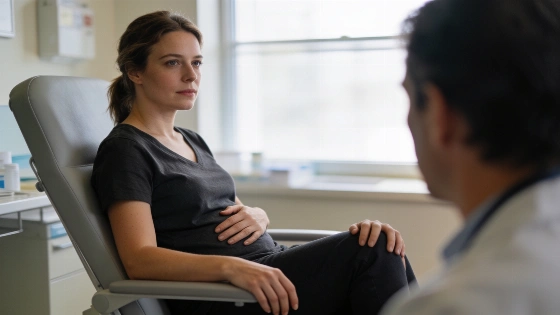
Women report more pain across most stages of life. Researchers link the gap to physiology and to the combined effects of paid work and unequal family care.
Data from 6,125,459 people in 118 countries and territories show how pain differs by sex. Participants ranged in age from 5 to over 100 years. Researchers from Instituto de Salud Carlos III and three Spanish universities found that women reported pain more often across most stages of life.
The study used self-reported pain data collected between 1990 and 2025. Nature Medicine published the research under DOI 10.1038/s41591-026-04696-w. The analysis covered eleven body areas: the head, face, neck, chest, stomach, back, elbow, hand, hip, knee and foot.
Women reported pain more often in those areas at different stages of life. The largest differences appeared in facial, head and abdominal pain. Women reported facial pain 83% more often than men, headache 74% more often and abdominal pain 60% more often, information from Nature Medicine.
Marta Miret from Universidad Autónoma de Madrid described the difference as multifactorial. Biology is part of the picture: the study points to menstrual migraine, endometriosis and rheumatoid arthritis.
Social conditions matter too. Women often combine paid work with a larger share of household care, leaving less time to seek help or rest when symptoms begin.
Pain can become persistent when people delay addressing it as work and family duties continue, the researchers explain. Men also tend to report pain less often than women. More reports from women so do not prove that men feel less pain.
The study relied substantially on symptoms reported by participants rather than diagnoses alone. This method captures people who rarely seek medical care, while also reflecting differences in willingness and chance to report pain. Nature Medicine reported that smoking, obesity and low household income together were associated with 18.3% of the global burden of pain. The corresponding estimate reached 27.1% in Eastern Europe, pointing to the role of potentially preventable social and health factors.
Age alone does not explain the pattern. Seven of the eleven body regions reached their highest pain levels during middle adulthood, often before the age of 55.
Headache and abdominal pain peaked earlier, while pain in the back, hip and knee kept rising with age.
Development levels also affected the picture. Among people over 65, pain linked to old age was more common in countries with low levels of development. Pain among young people was broadly similar across countries at different development levels.
Economic and social conditions were also linked to pain. The study identified obesity and addiction to alcohol and tobacco as modifiable factors. Prevention can target conditions that people and institutions can change.
The authors did not reduce the issue to personal choices. Their findings connect individual health with workload, care duties and the time available for treatment. The estimates suggest that household income, smoking and obesity should be considered alongside clinical risk factors in pain-prevention strategies.
Reported prevalence varied sharply by body area, ranging from roughly 2% for facial pain to about 40% for back pain.
Across 118 countries and eleven body regions, the gender gap appeared throughout the life course. It was not limited to one diagnosis or one age group. The findings support a view of pain as a condition that often reaches its highest prevalence during working and reproductive years, not only in old age.
Women’s pain cannot be assessed properly without considering physiology and unpaid care work. Social roles can affect when people report symptoms and whether they receive treatment. Ignoring that burden risks treating a repeated health pattern as a series of isolated complaints.