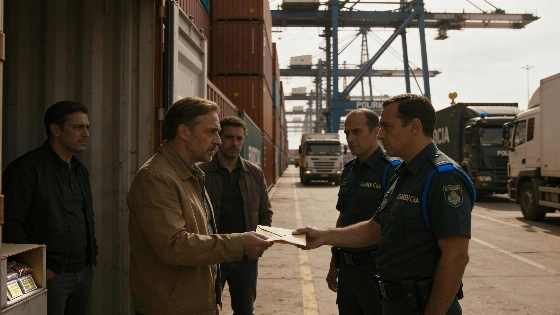
A major drug network in Valencia paid Guardia Civil officers up to 20% to move cocaine shipments. Investigators uncovered encrypted chats detailing bribes, threats, and a complex operation involving port workers and drivers.
Spanish investigators have uncovered a sophisticated drug trafficking network operating through the port of Valencia, where corrupt Guardia Civil officers allegedly received up to 20% of the profits to allow cocaine shipments worth over €60 million to pass unchecked. The details emerged from intercepted encrypted chats, as reported by EL PAÍS, following the dismantling of the organization in Operation Spider in July 2025.
The criminal group, led by figures identified as Daniel and Coscu, coordinated logistics for moving large quantities of cocaine hidden in shipping containers. Their communications, conducted via the Iranian encrypted app Zangi, revealed negotiations over bribes to Guardia Civil agents—referred to as “los verdes”—to ensure safe passage for the drugs. The traffickers debated whether to pay the officers directly or use intermediaries, emphasizing the need to identify which officials were involved in case of complications.
Operation Spider resulted in the seizure of 4.5 tonnes of cocaine and the arrest of 81 individuals, including a Guardia Civil officer. The investigation, led by Valencia’s Instruction Court 15, found that the network paid truck drivers between €100,000 and €120,000 per shipment, while port workers known as “rompedores” received €50,000 for removing container seals. The organization also considered hiring a Colombian mercenary to deal with a driver suspected of betrayal, highlighting the group’s willingness to use violence to maintain control.
The network’s structure extended deep into the port’s operations. Nine drivers and 17 port workers, including three key stevedores, played roles in moving the cocaine. The group infiltrated the port’s employment center, using a union official and a doctor to manipulate hiring exams and control staff rotations. This allowed them to manage container movements and ensure their shipments were handled by trusted personnel.
To avoid detection, the traffickers regularly deleted messages and rotated dozens of mobile phones. Despite these precautions, police recovered communications using forensic tools. The group’s reach was such that they often knew in real time when law enforcement seized their shipments, sometimes even learning the location of police officers monitoring their activities through paid informants inside the port.
After losing two shipments in one week, the organization explored new routes, including a test run from the Dominican Republic with 400 kilograms of cocaine. The group’s legal front was the transport company Lematrans, based at Valencia’s Club Náutico, which provided false entry orders to extract containers from the port. This allowed them to move 1,160 kilograms of cocaine in a single operation, according to the case summary.
Spain’s ports, especially Valencia, have become major entry points for South American cocaine into Europe, trailing only Antwerp and Rotterdam. The scale and complexity of the operation uncovered in Operation Spider illustrate the challenges Spanish authorities face in combating organized crime at critical infrastructure hubs. The case also highlights the vulnerability of port logistics to corruption and the lengths traffickers will go to secure their supply chains.
According to data from the Spanish Ministry of the Interior, the volume of cocaine seized in Spanish ports has increased steadily over the past decade, with traffickers constantly adapting their methods. The use of encrypted communication, infiltration of port employment systems, and direct bribery of law enforcement reflect broader trends in European drug trafficking. The Operation Spider case underscores the need for ongoing vigilance and reform in port security and oversight of public officials.