The Superior Court of Valencia has confirmed a 28-year prison term for a young man convicted of murdering a retired canon. The court rejected all defense arguments, including claims of procedural violations. The ruling is not yet final.
The Superior Court of Justice of the Valencian Community has confirmed the 28-year prison sentence handed down to a young man for his role in the murder of a retired canon from the Cathedral of Valencia. The decision, announced by the Civil and Criminal Chamber, rejects every argument raised by the defense, including alleged violations of fundamental rights and the presumption of innocence. The defense had sought a retrial with a new jury, but the court found no grounds to overturn the original verdict.
The case centers on the events of January 21, 2024, when the 79-year-old victim was killed in his central Valencia home. According to the jury's findings, the convicted man acted in concert with an unidentified accomplice. The accomplice suffocated the victim, leaving him no chance to defend himself, and took his mobile phone, a credit card, and a store card. These items were then handed over to the convicted man, who used the cards to withdraw cash and make purchases totaling over €2,300, and later spent an additional €375 with the second card. Part of the stolen money was given to the accomplice.
The court's ruling details that the convicted individual was sentenced to 20 years for murder, five years for violent robbery, and three years for continuous fraud. The defense's attempt to nullify the police search of the defendant's hostel room—where the victim's phone and cards were found—was dismissed. The judges noted that the defense failed to raise this objection at the appropriate stage of the proceedings, only bringing it up during closing arguments.
Further, the Superior Court found no breach of the defendant's right against self-incrimination or his right to present evidence. The panel also dismissed claims of procedural irregularities or any flaws in the verdict that could have led to an unfair trial. On the issue of the presumption of innocence, the court emphasized that it could not re-examine the evidence assessed by the jury, and concluded that the facts established at trial clearly pointed to the defendant's active involvement in the killing.
The ruling is not yet final and may be appealed to the Supreme Court. This case highlights the rigorous scrutiny applied by Spanish courts in high-profile criminal cases, especially when procedural challenges are raised. The confirmation of the sentence comes amid broader discussions about the effectiveness of Spain's judicial system, as seen in other recent cases such as the Madrid court's decision to uphold a prison sentence for Toño Sanchís over financial misconduct. Both cases underscore the courts' insistence on procedural correctness and the limits of appeals based on technicalities.
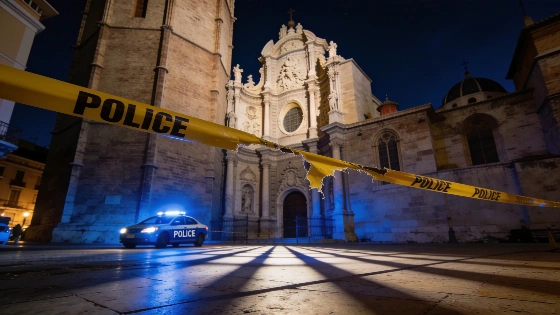
Spain's legal framework allows for multiple layers of appeal in serious criminal cases, but higher courts typically defer to the factual findings of juries and trial judges unless clear legal errors are demonstrated. The Cathedral of Valencia, a historic and religious landmark, has rarely been the scene of such violent crime, making this case particularly notable in the region. The ongoing possibility of a Supreme Court appeal means the legal process is not yet fully concluded, but the Superior Court's decision reinforces the original jury's conclusions and the severity of the offenses involved.