Valencia’s fireworks industry is demanding the protest camp leave the city’s main square so the October 9 mascletà can go ahead. Organizers warn that any last-minute changes could put safety at risk and spark lawsuits.
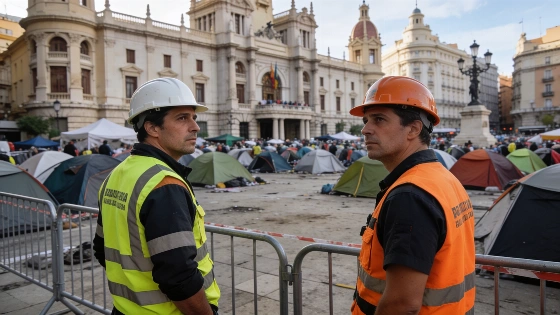
Valencia’s pyrotechnics industry has put city officials on notice: unless the Plaza del Ayuntamiento is cleared, the mascletà on October 9 will not happen. Nearly 500 tents from a protest camp now fill the square, blocking crews from setting up for one of the region’s biggest public events. Spanish media report the camp sprang up after a rally for affordable housing and quickly grew. By October 5–6, estimates ranged from 250 to over 600 people and more than 300 to 400 tents.
Fireworks associations are demanding the plaza be returned to public use right away. They say only a full evacuation will let them set up the mascletà safely and legally. Their message is blunt: authorities have failed to act, and moving the event at the last minute is out of the question. The sector points out that months of technical planning go into the mascletà, from mapping out safety zones to lining up emergency teams. The Asociación Española de la Pirotecnia confirms that changing the venue now is simply not possible.
On October 7, government delegate Pilar Bernabé stated that forced removal of the camp was not possible, as protesters were exercising their constitutional right to assembly.
The dispute has turned into a standoff between the Ayuntamiento de València and the Delegación del Gobierno. Pilar Bernabé, speaking for the government, says dismantling the camp is off the table and that firing the mascletà under current conditions is “inviable.” Protest leaders have suggested moving the show elsewhere, but pyrotechnics groups have shot down that idea. They say the event’s safety rules, technical setup, and emergency plans are all tailored to the plaza and can’t be improvised. Official statements show the city council has asked the government to step in over the unauthorized camp, but the government says its job is only to keep other events safe if they’re not affected by the protest.
The fallout could go beyond the mascletà. The fireworks sector warns the camp threatens not just the October 9 show after the civic procession and the offering to Jaume I, but also the 20th International Symposium on Fireworks, which is set to open on October 11. The Asociación Española de la Pirotecnia says the camp “physically prevents the safe assembly of installations,” putting both the event and Valencia’s reputation on the line. El País reports that while the October 9 program includes several events, only the mascletà is directly blocked by the camp. The civic procession and offering are still possible for now.
The scale of the protest camp changed rapidly over several days, with media reporting between 250 and over 600 participants and more than 400 tents, reflecting the camp's swift expansion and varying counts on different dates.
Legal threats are already in play. Pyrotechnics companies say they will go to court for compensation if the mascletà or other scheduled events are canceled or changed. They argue the protest camp is sabotaging a Bien de Interés Cultural (BIC) protected by state decree, which covers the civic procession and official acts in the plaza. The sector warns that trying to go ahead without proper conditions would void the whole operation and could bring heavy financial and reputational losses.
Organizers stress that every show takes months of investment, digital design, labor contracts, and custom-made fireworks built for the plaza’s unique layout. Their statement is clear: “Professionals and international companies cannot be held hostage or made to pay for a lack of institutional resolve in managing public space.” Several Spanish news outlets point out that the real sticking point is who should act—the city or the national government. That question remains unanswered.
Strict safety rules require mapped-out exclusion zones and advance security meetings. Any last-minute move would void permits and put public safety at risk. The sector won’t budge: improvising is not an option, and trying to go ahead without the right setup would kill the event. Official sources say that as of October 7, the civic procession could still happen, but the mascletà at its usual spot could not. The final call depends on talks between the city, protesters, and the government delegation.
This fight over public space and tradition echoes other recent high-stakes disputes in Spain, as seen in earlier political standoffs that have tested the limits of government authority and public patience.
With October 9 fast approaching, Valencia faces a tough decision: protect a centuries-old tradition and the jobs it supports, or let an unresolved protest block both local heritage and international events. The fireworks sector’s threat to sue has ramped up the pressure on city and national leaders. In Valencia, where tradition and protest now clash in the same square, the outcome will show how the city handles civic ritual, public dissent, and the law.