Valencia Authorities Offer Teachers Reforms Without Pay Raise. The Valencia authorities have presented teachers with a package of reforms that does not include salary increases. Unions expressed disappointment and continue to demand compensation for losses. Negotiations are taking place amid a widespread strike.
The standoff around the teachers' strike continues in Valencia: regional authorities have presented the unions with a new draft agreement that does not provide for a salary increase for educators. This has sparked a sharp response from industry representatives — unions called the initiative disappointing and stressed that the document does not contain real or measurable improvements to working conditions.
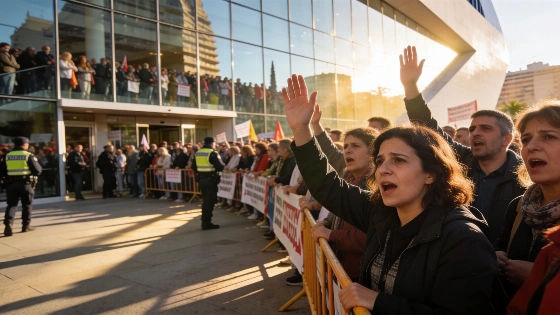
Hundreds of teachers gathered outside the regional education ministry building on Thursday morning to support their representatives at the negotiations. Just minutes into the meeting, it became clear: the issue of restoring teachers' purchasing power was not included in the official draft agreement. According to union data, losses since 2010 amount to about 20% of previous income levels, equivalent to 300–500 euros per month. The latest government offer — a 75-euro monthly raise over three years — is seen by educators as insufficient, who point out that regional salaries remain among the lowest in Spain.
Proposal details
The Valencia authorities, represented by Education Minister Carmen Ortí and Secretary Daniel McEvoy, presented a seven-point document. Among the measures are the gradual reduction of class sizes, especially in areas at risk of depopulation, as well as the launch of a plan to modernize school infrastructure, including improvements to temperature control and building accessibility. The project also includes simplifying bureaucratic procedures for teachers and introducing a digital teacher dossier.
To support the Valencian language, a teacher training program is proposed, especially in Spanish-speaking regions, as well as the restoration of the certification and diploma system that is taken into account in merit evaluations. The issue of hiring more teachers has been referred to a special commission that will analyze the needs of the system. In addition, the authorities promise to speed up the process of replacing absent teachers, especially for graduating classes and children with special educational needs.
Trade unions’ response and the course of negotiations
The STEPV, CC OO, UGT, CSIF and ANPE unions, who are organizing and supporting the strike, insist on the need for a real salary increase and compensation for the losses in recent years. According to them, the proposed document mainly repeats existing or legally mandated measures, without offering new concrete steps. CC OO representatives emphasized that excluding the salary issue from negotiations is perceived as a direct show of disrespect to the teaching profession.
Negotiations between the parties are ongoing, but the unions have already expressed deep disappointment with the authorities' position. Amid mass protests and pressure from teachers, the regional authorities are not yet ready to discuss financial matters, focusing instead on structural changes in the education system.
Context and consequences
The strike in the Valencian public education system began earlier this week and has affected around 78,000 teachers and more than half a million students. The situation is unfolding against a backdrop of general dissatisfaction with working conditions and pay in the sector. As RUSSPAIN notes, other regions of the country are also seeing protest sentiments among education workers, reflecting a nationwide trend towards a review of public sector working conditions. At the same time, in other fields, such as sports, regional events are also generating widespread public response—for example, major celebrations were recently held in Zubieta to mark Real Sociedad's qualification for the Champions League, as reported in detail in the feature on the football club's victory celebrations.