The Conselleria de Educación has started deducting pay from teachers who joined the recent indefinite strike. Deductions will be split into three phases, with the first already communicated. Unions criticize the speed and handling of the process.
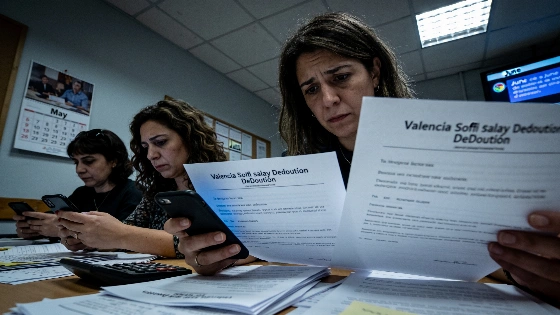
The Conselleria de Educación has initiated salary deductions for teachers in the Valencian public education system who participated in the recent month-long indefinite strike. The first round of deductions, covering the initial ten days of the strike, was communicated to affected staff this Friday. Each teacher received a message specifying the number of days’ pay to be withheld, based on their individual participation between May 11 and May 22. The Ministry plans to implement the deductions in three separate phases, with two more rounds expected in the coming weeks.
According to the Coordinadora de Asambleas Docentes, the financial impact for those who joined all 24 days of the strike could reach between €3,500 and €3,700 gross—equivalent to one and a half monthly salaries. This significant loss has prompted solidarity initiatives, including resistance funds supported by donations. By the time the strike was suspended, the Coordinadora’s fund had collected over 3,300 contributions, totaling €267,102.37 through transfers and Bizum.
Union representatives, particularly from the majority union Stepv, have criticized the Ministry’s approach. They argue that the deductions are being applied too quickly and without sufficient consideration for teachers’ financial stability. Stepv notes that during negotiations, they repeatedly requested that salary reductions be spread out over time to minimize hardship for families. Instead, the Ministry has chosen to deduct two weeks’ worth of pay in a single payroll cycle, a decision unions say was not properly communicated during sector meetings or through other official channels.
Further frustration has arisen from reports that some teachers have been notified—via OVIDOC, the Virtual Office for Teachers—of deductions for more strike days than they actually participated in. Cases include staff who were assigned to minimum service duties or were on leave, yet still saw those days counted against them. In response, Stepv is preparing a formal complaint template for affected teachers to request corrections from both their school administration and the Territorial Directorate, using the General Single Request process.
Salary deductions for strike participation are a standard practice in Spain’s public sector, but the scale and speed of the current measures have intensified debate in Valencia. The situation echoes broader tensions seen in other public events, such as the controversy during a minute of silence for Venezuelan earthquake victims at a Spain-Uruguay match, which also sparked public outcry and union criticism, as detailed in this related report on public sector disputes. In the context of the Valencian education system, the ongoing dispute highlights the challenges of balancing fiscal responsibility with the needs and rights of public employees. The Ministry’s decision to suspend, but not formally call off, the strike leaves open questions about future negotiations and the potential for further industrial action. For context, Spain’s education sector has seen periodic strikes over the past decade, often centered on funding, working conditions, and policy reforms. The current episode underscores the persistent friction between government authorities and teaching staff over how best to manage public education and labor relations.