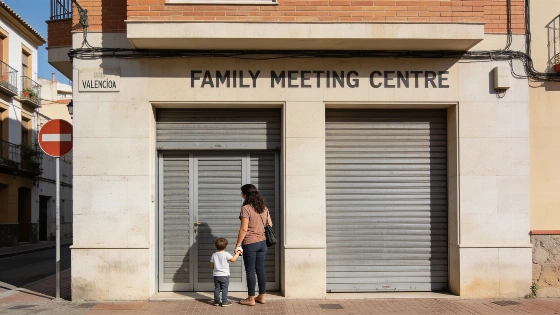
The Consell has approved the closure of seven judicial family meeting points across Valencia, Alicante and Castellón. The move affects over 2,000 families and has triggered sharp criticism from the PSPV-PSOE. The opposition warns of reduced protection for minors.
The Valencian regional government has confirmed the closure of seven judicial family meeting points in several municipalities, a decision that has drawn immediate and strong criticism from the PSPV-PSOE. The new map, published by the Conselleria de Servicios Sociales, eliminates these facilities in ten towns but adds three new locations, resulting in a net reduction of seven centers. The affected municipalities include Mislata, Manises, Paterna, Alfafar and Requena in Valencia; Sant Vicent del Raspeig, Torrevieja, la Vila Joiosa and Villena in Alicante; and Vila-real in Castellón. New centers will open in Benidorm, Moncada and Onda.
Romina del Rey, spokesperson for Infancia y Adolescencia in the Corts Valencianes, has called the move “inhumane” and warned that it will weaken the protection network for children and adolescents across the region. According to Del Rey, these judicial family meeting points are essential for more than 2,000 families who rely on court orders to ensure safe, supervised contact between minors and their relatives, often in situations involving family conflict or gender-based violence. She criticized the Consell, led by Juan Fran Pérez Llorca (PP), for what she described as a lack of sensitivity and disregard for vulnerable families.
The new arrangement, set to take effect in November, was formalized in a resolution published in the DOGV on July 29. The PSPV-PSOE has demanded an immediate reversal of the decision and announced plans to request the full dossier and supporting reports from the Conselleria. Del Rey also intends to summon the consellera Elena Albalat to the Corts to explain the rationale behind the closures. She argued that the decision puts children at risk and increases the burden on families already facing difficult circumstances.
The closure of these centers comes amid broader political tensions over the treatment of minors in the region. Del Rey referenced previous actions by the Consell and its allies to block the arrival of unaccompanied minors from Ceuta, suggesting a pattern of indifference to the needs of vulnerable children. This echoes national debates, as highlighted in recent coverage of regional resistance to hosting migrant minors, such as the situation described in this report on prosecutor intervention in Ceuta transfers.
Judicial family meeting points in Spain are designed to provide neutral, supervised environments for children to maintain relationships with parents or relatives when family conflict or legal restrictions make unsupervised contact unsafe. These centers are staffed by trained professionals and are considered a key part of the child protection system. The reduction in their number may lead to longer travel distances for affected families and increased pressure on the remaining facilities. The debate over their future reflects ongoing disputes about social policy priorities and the allocation of resources for vulnerable groups in the Valencian Community.