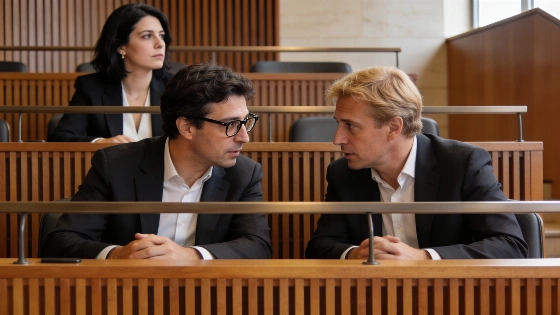
The Valencian Prosecutor's Office has begun investigating two Vox deputies after they were caught discussing confidential case details. The incident, recorded by an open microphone, has sparked political tension and raised questions about judicial secrecy.
The Prosecutor's Office in the Valencian Community has initiated an official investigation into two regional Vox deputies, David Muñoz and Jesús Albiol, after they were overheard boasting about access to confidential information from a sealed judicial case in Nules (Castellón). The conversation, captured by an open microphone in the Valencian Parliament a month ago, has triggered a formal complaint from the PSPV-PSOE and prompted the public prosecutor to assign an investigator to the case.
According to the prosecutor's document, reviewed by EL PAÍS, one of the deputies was heard stating he possessed personal information about an individual under investigation in the Nules case, allegedly provided by a prosecutor. The exchange took place during a break in the Economy, Budgets and Finance Committee session on July 15, when the deputies were unaware their conversation was being recorded. During the discussion, they also referred to socialist representative Alicia Andújar as a “bruja,” a term that has since drawn criticism for its sexist undertones.
The incident centers on a dismantled human trafficking ring in Nules, with Muñoz claiming knowledge of details about the suspects, which he attributed to a prosecutor's tip. Albiol responded by expressing surprise at the use of privileged information, particularly by the PSOE deputy. The conversation continued with disparaging remarks about Andújar's tone and behavior, further fueling controversy over the deputies' conduct and attitudes toward female colleagues.
Alicia Andújar, the deputy targeted in the conversation, publicly condemned the remarks as sexist, arguing that they reflect Vox's broader stance on women in politics. She stated that such comments reveal an expectation for women to remain quiet and non-confrontational. The PSPV-PSOE described the incident as “very serious” and called for a thorough investigation into the alleged leak of confidential judicial information.
This case highlights ongoing concerns about the handling of sensitive legal data within Spanish institutions. It also echoes previous controversies involving political figures and judicial secrecy, such as the transfer of the Leire Díez case to the Audiencia Nacional, which was reported when a Madrid judge relinquished control to Judge Santiago Pedraz. For more on similar judicial developments, see the analysis of the recent transfer of a high-profile case to the National Court.
In Spain, the unauthorized disclosure of information from ongoing judicial proceedings is a criminal offense, and public officials are held to strict standards regarding confidentiality. The current investigation will seek to determine whether the deputies' actions constitute a breach of these obligations and if any legal consequences should follow. The outcome could have implications for parliamentary conduct and the relationship between political representatives and the judiciary in the Valencian Community and beyond.