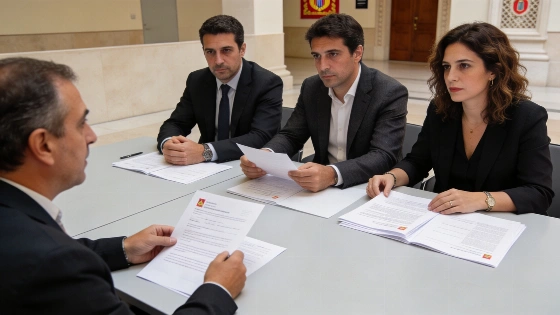
Major Conflict Between Valencia Teachers and Authorities: Salaries and Language Policy. The teachers' strike continues in Valencia. The main points of contention are salaries, language policy, and working conditions. Unions demand a revision of the authorities’ proposals and are unwilling to make concessions.
The Valencian Community is experiencing an ongoing acute phase of conflict between the three largest teachers' unions — STEPV, CC OO, and UGT — and the regional Ministry of Education. For 13 days now, public schools in the region have been on an indefinite strike, and the main points of disagreement remain unresolved. The unions' key demands concern salary levels, language policy, and working conditions for temporary teachers.
The unions consider the wage increase proposed by the authorities to be insufficient, as the indexation is limited to 2028. They also point out a lack of good faith in the negotiations: the agreements signed with CSIF and ANPE differ from those offered to other organizations. Another major issue is the conditions for temporary teachers: unions note that the new proposals do not provide any improvements for this category of workers.
The parties found more common ground on the issue of reducing bureaucracy in schools. The Ministry of Education promised to simplify administrative procedures, reduce the volume of official paperwork for assessments within six months, and create a single channel for information exchange. However, unions remain dissatisfied with the proposed student-teacher ratios: the parameters set by the authorities are lower than those in the Spanish government's plan. The Ministry is willing to discuss further reductions but does not name specific numbers, and for schools unable to meet the new standards, it only offers additional staff. This approach is rejected by the unions.
In the package aimed at strengthening teaching staff, unions note that the authorities have agreed to discuss staff numbers outside the context of the strike, but have not provided guarantees for reinstating cut positions in vocational education, language schools, and adult education centers. The ministry promises to reduce the period for replacing absent teachers from 10 to 8 days and to increase staffing in kindergartens by adding more educators. The practice of hiring specialists for the next academic year will also continue. Despite some positive aspects, unions believe the authorities are not prepared to restore previously eliminated positions.
According to the ministry, investments in educational infrastructure will amount to approximately 370 million euros, but unions say this sum is insufficient. There are still no concrete budget decisions for schools affected by natural disasters. The authorities have agreed to hold a separate meeting on this issue before the end of the academic year and to organize quarterly monitoring of investments, which unions view positively.
In the field of vocational education, trade unions do not accept the retention of shortened study cycles for the 2026/27 academic year, as this refers to maintaining the overall number of programs rather than reinstating previously discontinued courses. The authorities are willing to create a working group to discuss internships at enterprises. The language issue also remains pressing: unions call the proposals regarding the Valencian language superficial and accuse the administration of lacking interest in developing the regional language.
While unions continue consultations with educators on the ministry's new documents, a decision on accepting or rejecting the proposals is expected soon. For comparison, in other regions of Spain, disputes over school conditions have also led to court proceedings. For example, in Seville, a court recently closed a case against a school after a tragedy involving a student,. This underscores how acute the issues of education and government responsibility are in the country.
For reference: there are over 1,800 public schools in the Valencian Community, and the number of teachers exceeds 60,000. Issues of salaries and working conditions are regularly the subject of negotiations between unions and the authorities. In recent years, Spain has seen increased focus on regional languages, which affects educational policy in the autonomous communities.