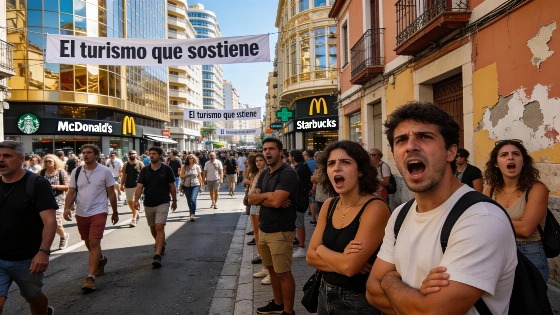
The Generalitat Valenciana's new tourism campaign has reignited debate over the real impact of mass tourism. Critics point to rising housing costs, strained public services, and accusations of selective hospitality.
The Generalitat Valenciana's recent launch of the campaign “El turismo que sostiene” has triggered a wave of criticism across the region. While the campaign promotes sustainability and hospitality, many residents and observers argue that the reality on the ground tells a different story. The campaign's slogans, which speak of 'giving opportunities' and 'leaving things better than we found them,' have been met with skepticism, especially as the region faces mounting challenges linked to mass tourism.
In cities like València, the daily influx of visitors is straining public transport, sidewalks, and essential infrastructure. Locals report feeling increasingly alienated in their own neighborhoods, as international franchises replace traditional businesses and the urban landscape shifts rapidly. The campaign's optimistic messaging stands in stark contrast to the lived experience of many residents, who see tourism as sustaining precarious jobs and an economy vulnerable to global shocks, geopolitical instability, and the growing threat of climate change.
Critics also highlight a contradiction in the Generalitat's approach. While the campaign emphasizes sharing and caring for the community, the current political climate—shaped by the influence of the Partido Popular and the far-right Vox—raises questions about who is truly welcome. The government's rhetoric of hospitality appears to target only those who can afford to participate in the tourism economy, while policies increasingly marginalize migrants and those seeking a better life. This selective approach to hospitality has drawn comparisons to broader trends in Spanish politics, where debates over national identity and exclusion remain highly charged. For example, the rise of Vox and its impact on institutional attitudes has been explored in depth in analyses such as this recent report on the persistence of Francoist ideas in Spanish power structures.
Residents point to practical consequences: unaffordable rents, overcrowded public transport, and rising prices for everyday goods. The campaign's promises of sustainability are seen as hollow when set against the backdrop of these daily struggles. Meanwhile, those arriving in search of work or fleeing hardship often face institutional barriers and social exclusion, with language and cultural differences further complicating integration. The focus on serving tourists—learning foreign languages to cater to visitors, for example—contrasts sharply with the lack of support for newcomers from less privileged backgrounds.
Contextually, Spain remains one of the world's top tourist destinations, with the sector accounting for a significant share of GDP and employment. However, the debate over the true costs and benefits of mass tourism is intensifying, especially in regions like the Valencian Community. As local governments seek to balance economic interests with social cohesion and environmental sustainability, the effectiveness and sincerity of campaigns like “El turismo que sostiene” are likely to remain under scrutiny. The controversy highlights a broader national conversation about who benefits from tourism and what kind of society Spain wants to sustain in the years ahead.